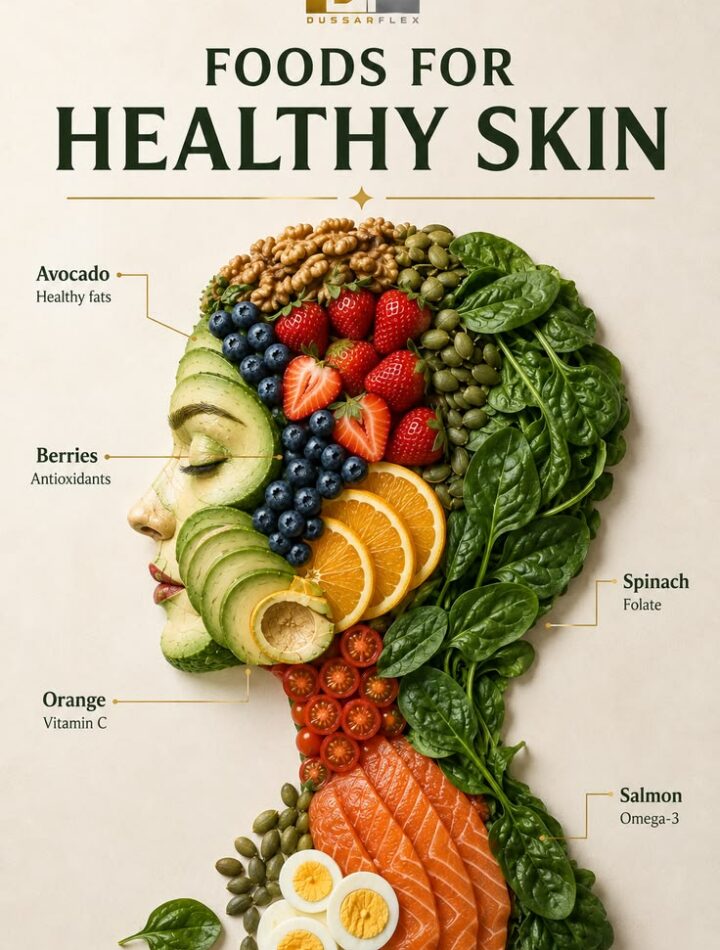
Healthy-looking, smooth skin starts with more than skincare products. The foods you eat provide nutrients that support collagen production, hydration, antioxidant protection, and the skin’s natural repair processes. While no single food can transform your skin overnight, a balanced diet rich in colorful fruits, vegetables, healthy fats, protein, and water can help support a healthy complexion over time.
This Skin Smoothness Food Guide focuses on simple, nourishing ingredients that can easily become part of everyday meals.
Ingredients
- 1 cup berries, such as strawberries or blueberries
- 1 small orange
- 1/2 avocado
- 1 cup spinach
- 1 tablespoon chia seeds
- 1 tablespoon pumpkin seeds
- 1/2 cup plain Greek yogurt
- 1 tablespoon walnuts, chopped
- 1 cup cucumber, sliced
- 1 cup water or unsweetened coconut water
- 1 teaspoon fresh lemon juice
- Optional: a small piece of fresh ginger
Why These Foods Support Skin Health
Berries
Strawberries, blueberries, raspberries, and blackberries are rich in vitamin C and plant compounds called antioxidants. Vitamin C contributes to normal collagen formation, while antioxidants help protect cells from oxidative stress. Adding a handful of berries to breakfast, yogurt, or smoothies is an easy way to increase your fruit intake.
Oranges
Oranges provide vitamin C and water, making them a refreshing addition to a skin-friendly eating pattern. Enjoy a whole orange rather than relying only on juice, because whole fruit also provides fiber.
Avocado
Avocado contains monounsaturated fats and vitamin E. Healthy fats are important for overall nutrition, while vitamin E has antioxidant properties. Mash avocado onto whole-grain toast, add it to salads, or use it as a creamy addition to a balanced bowl.
Spinach
Leafy greens such as spinach provide folate, vitamin C, carotenoids, and other nutrients. Eating a variety of vegetables gives your body a broader range of vitamins, minerals, and protective plant compounds.
Chia Seeds
Chia seeds provide fiber, minerals, and plant-based omega-3 fatty acids. They can be stirred into yogurt, oatmeal, smoothies, or overnight pudding. Because chia seeds absorb liquid, allow them to soften before eating them in larger amounts.
Pumpkin Seeds and Walnuts
Seeds and nuts provide healthy fats, protein, minerals, and antioxidant compounds. Pumpkin seeds are especially useful as a source of zinc, while walnuts provide plant-based omega-3 fatty acids. A small portion makes a convenient snack or topping.
Greek Yogurt
Plain Greek yogurt supplies protein, which is important for maintaining and repairing body tissues. Choose unsweetened varieties and add fresh fruit for natural sweetness. If dairy does not suit you, an unsweetened fortified alternative can be substituted.
Cucumber
Cucumber has a high water content and can contribute to daily fluid intake. It makes a refreshing addition to salads, sandwiches, snacks, or a simple infused-water combination.
Skin-Supporting Smoothie
One easy way to combine several of these foods is to prepare a fresh smoothie.
Add the berries, orange, avocado, spinach, chia seeds, Greek yogurt, and water to a blender. Blend until smooth and creamy. Add a little more water if necessary to achieve your preferred consistency. Finish with a teaspoon of lemon juice and optional ginger.
Serve immediately.
This smoothie provides a combination of fruits, vegetables, protein, healthy fats, fiber, and fluids. It can work well as part of breakfast or as a filling snack.
Simple Daily Food Routine
You do not need to consume every ingredient at once. Instead, spread skin-supportive foods throughout the day.
For breakfast, try Greek yogurt topped with berries, chia seeds, and walnuts. Another option is whole-grain toast with avocado and a side of orange.
For lunch, prepare a large salad with spinach, cucumber, avocado, seeds, grilled chicken or beans, and a simple olive-oil dressing.
For an afternoon snack, choose fruit with a small handful of walnuts or pumpkin seeds.
At dinner, build a balanced plate around a protein source, vegetables, and a whole-grain or starchy carbohydrate. Drink water throughout the day according to your thirst and individual needs.
Hydration Matters
Even the most nutritious diet cannot replace adequate hydration. Water helps maintain normal body functions, and dehydration can make you feel tired and generally unwell. Keep water available during the day and choose water or other unsweetened beverages most often.
Fruits and vegetables can also contribute to overall fluid intake. Cucumber, oranges, berries, melon, tomatoes, and leafy greens are useful examples.
Foods to Limit
Supporting healthy skin is not about completely eliminating favorite foods. However, diets consistently high in added sugars, highly processed foods, and excessive alcohol may make it harder to maintain an overall nutritious eating pattern.
Instead of focusing on restriction, emphasize variety. Replace sugary snacks with fruit and yogurt, choose nuts instead of heavily processed snack foods, and make vegetables a regular part of lunch and dinner.