
Introduction
Hibiscus, cinnamon, cloves, and bay leaf herbal tea is a delicious, naturally colourful, and aromatic drink that can easily be prepared at home using simple kitchen ingredients. This beautiful deep-red herbal infusion combines the fruity, slightly sour taste of dried hibiscus flowers with the warm aroma of cinnamon, the spicy flavour of cloves, and the earthy fragrance of bay leaves.
This traditional-style herbal drink is enjoyed in different parts of the world, particularly as a warm beverage during colder weather. It can also be served chilled during summer. The combination of these ingredients creates a refreshing drink with a pleasant aroma and a naturally tangy flavour.
One of the best things about this recipe is that it requires no complicated equipment or expensive ingredients. You only need water, dried hibiscus flowers, cinnamon sticks, cloves, and a bay leaf. You can also add honey, lemon, or a little ginger according to your personal taste.
In this recipe, we will explain how to prepare this beautiful herbal tea, the correct quantities of ingredients, the cooking method, serving suggestions, and important precautions.
Ingredients

The following ingredients are sufficient to prepare approximately 3–4 cups of herbal tea.
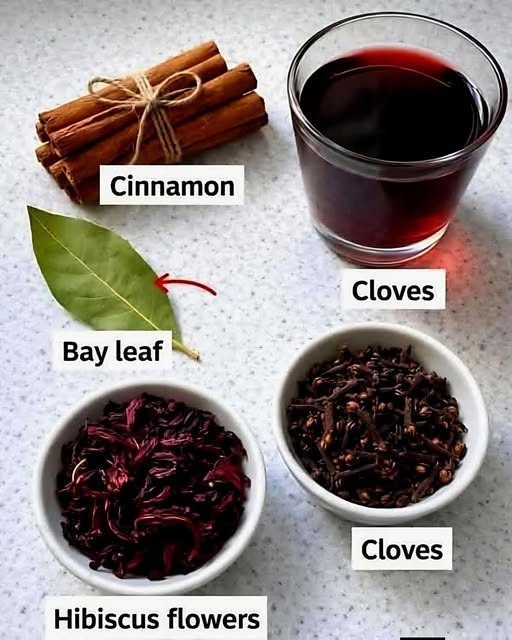
- Dried hibiscus flowers: 2 tablespoons. These provide the beautiful red colour and naturally tangy flavour.
- Cinnamon sticks: 2 medium-sized sticks. Cinnamon gives the tea a warm, sweet, and spicy aroma.
- Whole cloves: 5–6 cloves. Cloves add a strong, distinctive fragrance and a slightly spicy taste.
- Bay leaf: 1 medium-sized dried or fresh bay leaf. It adds an earthy and herbal aroma.
- Water: 4 cups. Water is the main ingredient used to extract the flavours and colour.
- Honey: 1–2 teaspoons, optional. Use it if you prefer a sweeter drink.
- Lemon juice: 1 teaspoon, optional. Lemon adds extra freshness and tanginess.
- Fresh ginger: 2–3 thin slices, optional. Ginger provides additional warmth and flavour.
You can adjust the quantities according to your taste. If you prefer a stronger flavour, increase the amount of hibiscus flowers slightly. If you prefer a mild drink, use fewer cloves and cinnamon.
Preparation Method
Step 1: Prepare the ingredients
Begin by measuring all the ingredients carefully. Take the dried hibiscus flowers and remove any unwanted particles or debris. If necessary, rinse them quickly and drain well.
Take the cinnamon sticks and gently break them into smaller pieces. This helps release their natural aroma during boiling.
Measure the whole cloves and wash the bay leaf if it is fresh. If you are using a dried bay leaf, simply check that it is clean and free from dust.
Keep all the ingredients ready before starting the cooking process.
Step 2: Boil the water
Take a medium-sized stainless-steel saucepan and pour in four cups of fresh drinking water.
Place the saucepan on the stove over medium heat. Allow the water to come to a gentle boil.
Avoid using excessively high heat because the water may evaporate too quickly. A controlled temperature helps extract the flavours gradually.
Step 3: Add cinnamon and cloves
Once the water begins boiling, add the cinnamon sticks and whole cloves.
Stir gently with a clean spoon.
Allow these spices to simmer for approximately 5 minutes. During this time, their aromatic compounds will gradually infuse into the water.
You will notice a pleasant spicy fragrance developing in your kitchen.
Cinnamon contributes a warm, naturally sweet aroma, while cloves provide a stronger and more intense flavour.
Step 4: Add the bay leaf
Now add one bay leaf to the saucepan.
Allow it to simmer with the cinnamon and cloves for another 2–3 minutes.
The bay leaf adds a subtle herbal flavour that complements the other ingredients.
Do not add too many bay leaves because their flavour can become overpowering.
Step 5: Add hibiscus flowers

Now add two tablespoons of dried hibiscus flowers to the saucepan.
Stir gently to ensure that the flowers are properly immersed in the hot water.
Almost immediately, you will notice the water changing colour. The hibiscus flowers release their natural pigments, producing a beautiful deep-red or ruby-red infusion.
Reduce the heat to low and allow everything to simmer for approximately 5–7 minutes.
Avoid boiling the hibiscus flowers for too long because prolonged heating can produce an excessively strong or sour flavour.
Step 6: Turn off the heat and allow it to steep
After simmering, turn off the stove.
Cover the saucepan with a lid and allow the herbal mixture to steep for another 5 minutes.
This resting period allows the flavours of hibiscus, cinnamon, cloves, and bay leaf to blend together.
The longer the tea steeps, the stronger its flavour may become. However, avoid excessive steeping if you prefer a lighter and smoother drink.
Step 7: Strain the herbal tea

Take a clean fine-mesh strainer and carefully strain the prepared liquid into a heat-resistant jug or container.
Remove the hibiscus petals, cinnamon sticks, cloves, and bay leaf.
You should now have a beautiful dark-red herbal drink with a pleasant spicy and floral aroma.
Allow it to cool slightly before adding any sweetener.
Step 8: Add honey and lemon
If you enjoy a slightly sweet flavour, add one or two teaspoons of honey.
Stir until the honey dissolves completely.
You can also add a little fresh lemon juice for extra tanginess.
Taste the tea and adjust the sweetness according to your preference.
Honey is optional because hibiscus naturally has a pleasant tart flavour that some people enjoy without any added sweetener.
How to Serve Hibiscus Herbal Tea


This herbal drink can be enjoyed in several ways.
1. Serve it warm: Pour the freshly prepared tea into a glass or ceramic cup. Enjoy it slowly while warm, especially during winter evenings.
2. Serve it chilled: Allow the tea to cool completely and refrigerate it for approximately 1–2 hours. Serve over ice cubes for a refreshing summer beverage.
3. Add lemon: A small amount of lemon juice enhances the tangy taste and makes the drink more refreshing.
4. Add honey: If you find the natural sourness of hibiscus too strong, honey can balance the flavour.
5. Garnish with cinnamon: You can place a small cinnamon stick in the serving glass for an attractive presentation and additional aroma.
Possible Benefits of the Ingredients
Each ingredient has its own culinary and nutritional characteristics.
1. Hibiscus flowers
Hibiscus flowers contain naturally occurring plant pigments called anthocyanins, which give the drink its attractive red colour. They also contain antioxidant compounds.
Hibiscus tea is naturally caffeine-free when prepared without tea leaves. Its refreshing, slightly sour flavour makes it a popular alternative to sugary beverages.
2. Cinnamon
Cinnamon is a popular kitchen spice used in beverages and cooking. It contains aromatic plant compounds and contributes a naturally sweet, warming flavour.
It can make herbal drinks more enjoyable without requiring large amounts of added sugar.
3. Cloves
Cloves are aromatic flower buds that contain eugenol and other naturally occurring compounds. They have a distinctive warm and spicy flavour.
Only a small quantity is needed because their taste is quite strong.
4. Bay leaf
Bay leaves are commonly used in soups, curries, rice dishes, and herbal preparations. They contribute a mild, earthy fragrance and complement the flavours of cinnamon and cloves.
Important: Although these ingredients contain naturally occurring plant compounds, this drink should be considered a food beverage rather than a medicine. It is not a proven treatment for diabetes, high blood pressure, weight loss, infections, or other medical conditions.
Important Precautions
Although this recipe uses common culinary ingredients, a few precautions are important.
- Do not consume excessive amounts of this herbal drink.
- Hibiscus may lower blood pressure, so people with low blood pressure or those taking blood-pressure medication should consult a healthcare professional before drinking it regularly.
- People taking diabetes medication should be cautious because hibiscus may influence blood glucose levels.
- Pregnant or breastfeeding individuals should seek medical advice before regularly consuming concentrated herbal preparations.
- Use cinnamon in moderate culinary quantities. Cassia cinnamon, in particular, contains coumarin, which can be harmful to the liver in excessive amounts.
- Avoid drinking the preparation if you experience an allergic reaction or digestive discomfort.
- Always use clean, food-grade ingredients and fresh drinking water.
Storage Instructions
If you prepare more tea than you can drink immediately, allow it to cool and transfer it into a clean, covered glass bottle or airtight container.
Refrigerate promptly and preferably consume within 2–3 days.
Do not leave the prepared herbal tea at room temperature for extended periods. Before serving, check its smell and appearance. Discard it if you notice unusual odours, mould, or signs of spoilage.
You can serve the refrigerated tea cold or gently reheat the amount you wish to drink.
Frequently Asked Questions
1. Can I drink hibiscus tea every day?
Moderate consumption may be suitable for many healthy adults, but individual tolerance and medical conditions vary. Consult your healthcare professional if you take medication or have a health condition.
2. Can I prepare this drink without honey?
Yes. Honey is completely optional. Hibiscus, cinnamon, cloves, and bay leaf already provide plenty of natural flavour.
3. Can I drink this tea at night?
Yes, it contains no caffeine when prepared using only the ingredients in this recipe. However, individual sensitivity and medical considerations should be taken into account.
4. Can I use fresh hibiscus flowers?
Yes, provided they are an edible hibiscus variety that has been correctly identified and grown without unsuitable pesticide exposure. Adjust the quantity according to the strength of the flowers.
5. Can I add ginger?
Absolutely. Two or three thin slices of fresh ginger can provide a pleasant warming flavour that works beautifully with cinnamon and cloves.