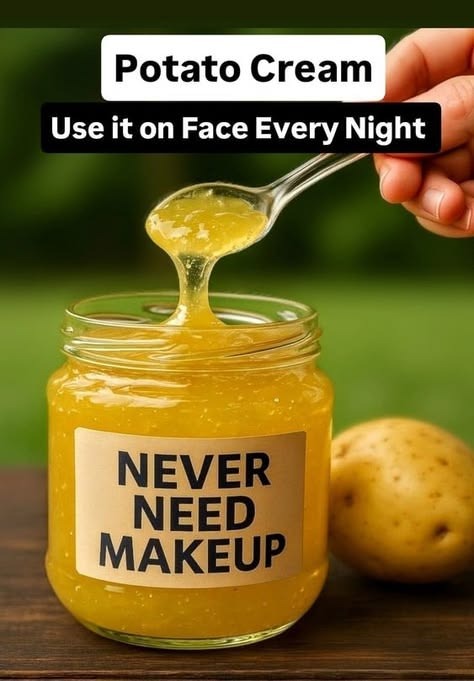
Potato gel is a popular DIY skincare preparation made with fresh potato and a few gentle ingredients. It is often shared as a natural way to make the skin look brighter, smoother, and more refreshed. While potatoes contain compounds such as vitamin C and starch, there is not strong clinical evidence that homemade potato gel can remove dark spots or permanently lighten pigmentation. Dark spots have many possible causes, including acne, inflammation, hormonal changes, and sun exposure. (Cleveland Clinic)
That said, a freshly prepared potato gel can be used as a simple soothing, hydrating mask if your skin tolerates it. The key is to keep the recipe gentle and avoid ingredients that can irritate the skin.
Ingredients
- 1 small fresh potato
- 2 tablespoons clean water
- 1 tablespoon plain, fragrance-free aloe vera gel, optional
- 2–3 drops vegetable glycerin, optional
- A clean glass bowl
- Fine-mesh strainer or clean cheesecloth
- Small clean container with a lid
Important Note
Because this recipe contains fresh potato and no preservative system, it should not be treated like a commercially preserved skincare product. Fresh homemade mixtures can become contaminated with microorganisms. For the safest approach, prepare a small amount and use it immediately rather than storing a large batch.
How to Make Potato Gel
Step 1: Wash the Potato
Choose a firm, fresh potato. Wash it thoroughly under running water to remove dirt and debris.
Peel the potato if desired. Although potato skin contains various plant compounds, using peeled potato makes the preparation easier to clean and process for a facial application.
Step 2: Grate the Potato
Finely grate the potato into a clean bowl. Add approximately two tablespoons of clean water and mix well.
Allow the mixture to sit for about 5–10 minutes. The grated potato will release liquid containing starch and other water-soluble compounds.
Step 3: Extract the Potato Liquid
Place the mixture into a fine-mesh strainer or clean cheesecloth. Press gently to collect the liquid in another clean bowl.
You should have a thin, cloudy potato liquid.
Step 4: Create a Gel-Like Texture
For a simple fresh gel, mix the potato liquid with approximately one tablespoon of plain aloe vera gel.
If you want a slightly more moisturizing consistency, add two or three drops of vegetable glycerin and mix thoroughly.
The finished mixture should be smooth and spreadable rather than excessively watery.
Step 5: Patch Test
Before putting the mixture all over your face, apply a small amount to an inconspicuous area of skin, such as the inside of your forearm.
Wait and observe the area. If you experience burning, significant redness, itching, swelling, or discomfort, wash it off and do not use the mixture on your face.
This step is particularly important with homemade skincare because natural does not automatically mean irritation-free.
How to Use Potato Gel on Your Face
Start with freshly cleansed skin. Gently wash your face with a mild cleanser and pat dry.
Apply a thin layer of potato gel to the face, avoiding the eyes, lips, nostrils, and any cuts or irritated areas.
Leave it on for approximately 10–15 minutes. There is no need to leave it on overnight simply because some social-media recipes recommend nightly use.
Rinse thoroughly with lukewarm water and gently pat your skin dry.
Finish with a simple moisturizer.
For the first few applications, use it only occasionally to see how your skin responds. If your skin becomes dry, itchy, red, or irritated, discontinue use.
Can Potato Gel Remove Dark Spots?
This is where it is important to separate traditional beauty advice from established dermatological evidence.
Dark spots are a form of hyperpigmentation, meaning certain areas of skin contain more pigment than the surrounding skin. They can develop after acne or other inflammation, because of sun exposure, hormonal changes, certain medications, and other causes. (Cleveland Clinic)
Potato gel is frequently promoted online as a natural dark-spot treatment, but there isn’t strong clinical evidence showing that applying homemade potato gel to the face reliably removes hyperpigmentation.
Therefore, it is better to think of this recipe as a fresh, gentle skincare mask, rather than a proven pigmentation treatment.
If your primary goal is reducing dark spots, sun protection is much more important. Dermatologists recommend broad-spectrum sunscreen with SPF 30 or higher to help protect against further pigmentation and sun damage. (American Academy of Dermatology)
Why Does Skin Sometimes Look Brighter After a Mask?
A homemade mask can temporarily make skin appear fresher or smoother because the skin has been cleansed and hydrated.
When the surface of the skin is adequately moisturized, fine dryness can become less noticeable, giving the face a softer and more luminous appearance.
This temporary glow should not be confused with permanent removal of pigmentation.
For persistent pigmentation, dermatologists may recommend ingredients with stronger evidence, depending on the cause. Options can include vitamin C, niacinamide, azelaic acid, glycolic acid, retinoids, kojic acid, or other treatments. The appropriate choice depends on your skin and the type of pigmentation. (Cleveland Clinic)
Potato Gel for Dry Skin
If your skin is dry, the optional aloe vera and glycerin can make the mixture feel more moisturizing.
However, you don’t need a complicated homemade formula. After rinsing the mask away, applying a fragrance-free moisturizer is often a more dependable way to support the skin barrier.
Avoid adding lemon juice, undiluted vinegar, baking soda, toothpaste, or strong essential oils to this recipe. These ingredients can irritate facial skin, and irritation can sometimes make pigmentation more noticeable.
In particular, people with darker skin tones should be cautious about irritating DIY treatments because inflammation can contribute to additional dark marks. The American Academy of Dermatology notes that irritation can trigger hyperpigmentation in skin of color. (American Academy of Dermatology)
How Often Should You Use It?
There is no medically established schedule for potato gel because its effectiveness for treating pigmentation has not been established.
If you enjoy using it as a cosmetic mask, once or twice a week is a reasonable conservative approach, provided your skin tolerates it.
You do not need to use it every night. More frequent application does not necessarily produce better results, and excessive experimentation with homemade products can cause irritation.
Always make a fresh batch rather than keeping homemade potato gel around for weeks.
Storage and Hygiene
This is one of the most important parts of the recipe.
Fresh potato gel contains water and food-based ingredients but no reliable cosmetic preservative system. Bacteria, yeast, and mold can multiply in homemade mixtures.
Use a clean bowl, clean utensils, and clean hands while preparing it. Ideally, make only enough for one application.
If you notice an unusual smell, discoloration, mold, bubbling, or a change in texture, discard it immediately.
Never dip dirty fingers into a stored homemade skincare mixture.
Who Should Avoid This DIY Treatment?
Do not apply potato gel to broken, scratched, sunburned, infected, or severely irritated skin.
If you have eczema, rosacea, very sensitive skin, or a known allergy to any ingredient, speak with a dermatologist before experimenting with homemade facial treatments.
Also, don’t assume that every dark or light patch is simply a cosmetic spot. Some pigmentation changes can be associated with underlying skin conditions. If a spot is changing, spreading, itching, bleeding, painful, or otherwise unusual, professional evaluation is more appropriate than a DIY remedy. (American Academy of Dermatology)
A Better Routine for Glowing Skin
If your goal is naturally healthier-looking skin, keep your routine simple:
Morning:
Cleanse gently → moisturize → apply broad-spectrum SPF 30+ sunscreen.
Evening:
Cleanse gently → use a suitable skincare treatment if needed → moisturize.
You can occasionally use the potato gel as an optional cosmetic mask, but it should complement—not replace—basic skincare.