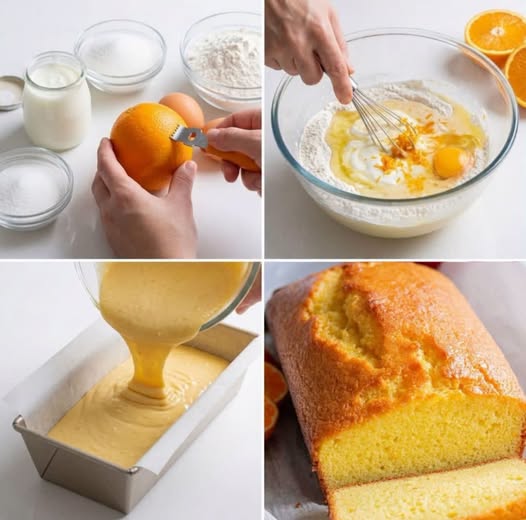
Orange Yoghurt Cake is a soft, moist, and beautifully fragrant dessert made with fresh orange juice, orange zest, and creamy yoghurt. It has a tender crumb, gentle citrus flavor, and a lightly golden top. This simple cake is perfect for afternoon tea, breakfast, family gatherings, or whenever you want an easy homemade treat.
Ingredients
For the Cake
- 2 cups all-purpose flour
- 2 teaspoons baking powder
- ½ teaspoon baking soda
- ¼ teaspoon salt
- ¾ cup plain yoghurt
- ¾ cup granulated sugar
- ½ cup vegetable oil or melted unsalted butter
- 3 large eggs
- 1 tablespoon finely grated orange zest
- ½ cup fresh orange juice
- 1 teaspoon vanilla extract
For the Orange Glaze
- 1 cup powdered sugar
- 2–3 tablespoons fresh orange juice
- 1 teaspoon finely grated orange zest
Optional Garnish
- Thin orange slices
- Extra orange zest
- A light dusting of powdered sugar
Equipment
- 9-inch round cake pan or 9 x 5-inch loaf pan
- Mixing bowls
- Whisk
- Rubber spatula
- Measuring cups and spoons
- Cooling rack
Instructions
1. Prepare the Oven and Pan
Preheat your oven to 350°F (175°C). Grease a 9-inch round cake pan or loaf pan with butter or cooking spray. Line the bottom with parchment paper if desired. This makes removing the cake much easier after baking.
Set the prepared pan aside while you make the batter.
2. Combine the Dry Ingredients
In a medium bowl, whisk together the flour, baking powder, baking soda, and salt. Mixing these ingredients separately helps distribute the leavening agents evenly throughout the flour.
Set the bowl aside.
3. Mix the Wet Ingredients
In a large mixing bowl, whisk the yoghurt, sugar, and oil until smooth. Add the eggs one at a time, whisking well after each addition.
Add the orange zest, fresh orange juice, and vanilla extract. Stir until everything is thoroughly combined.
Fresh orange juice and freshly grated zest give the cake a much brighter citrus flavor than bottled juice. When zesting the orange, grate only the colorful outer skin and avoid the white pith underneath, which can taste bitter.
4. Make the Batter
Gradually add the dry ingredients to the wet mixture. Use a rubber spatula or whisk to gently combine everything.
Do not overmix the batter. Stop stirring as soon as you no longer see large streaks of flour. A few small lumps are perfectly fine.
Overmixing can develop too much gluten and make the finished cake dense instead of soft.
5. Fill the Pan
Pour the batter into the prepared pan. Smooth the top gently with a spatula.
Tap the pan lightly on the counter once or twice to remove any large air pockets.
Place the pan in the center of the preheated oven.
6. Bake
Bake the cake for approximately 35–45 minutes, depending on the size and shape of your pan.
Begin checking the cake around 35 minutes. Insert a toothpick or skewer into the center. If it comes out clean or with a few moist crumbs attached, the cake is ready.
The top should look lightly golden and should spring back gently when touched.
If the top is browning too quickly while the center still needs more time, loosely cover the cake with aluminum foil and continue baking.
7. Cool the Cake
Remove the cake from the oven and allow it to cool in the pan for about 10–15 minutes.
Carefully remove it from the pan and transfer it to a wire rack. Let it cool completely before adding the glaze.
Cooling the cake completely helps the glaze set properly and prevents it from melting away.
Making the Orange Glaze
While the cake cools, prepare the glaze.
Place the powdered sugar in a small bowl. Add 2 tablespoons of fresh orange juice and whisk until smooth.
If the glaze is too thick, add another teaspoon of orange juice at a time until you reach a thick but pourable consistency.
Stir in the orange zest for extra flavor.
Drizzle the glaze over the cooled cake, allowing it to naturally run down the sides. For a simpler finish, you can skip the glaze and dust the cake lightly with powdered sugar.
Serving Suggestions
Slice the Orange Yoghurt Cake and serve it with tea, coffee, or a cold glass of milk. It is delicious at room temperature but can also be served slightly chilled.
For a more special dessert, serve each slice with a spoonful of whipped cream, Greek yoghurt, or vanilla ice cream. Fresh orange segments or berries also make a lovely accompaniment.
Tips for the Best Orange Yoghurt Cake
Use room-temperature ingredients: Eggs and yoghurt blend more easily when they are not ice cold.
Choose fresh oranges: Fresh juice and zest provide the strongest natural citrus flavor.
Don’t overmix: Mix only until the flour is incorporated to keep the cake tender.
Measure flour correctly: Spoon flour into your measuring cup and level it with a knife instead of packing it down.
Watch the baking time: Every oven is slightly different. Start checking the cake early rather than relying only on the clock.
Let it cool before glazing: A warm cake can cause the glaze to become too thin and disappear into the surface.
Storage
Store the cooled cake in an airtight container at room temperature for up to 2 days. For longer storage, refrigerate it for up to 5 days.
Because refrigeration can make cakes firmer, allow refrigerated slices to sit at room temperature for about 15–20 minutes before serving.
The cake can also be frozen. Wrap individual slices tightly in plastic wrap and place them in a freezer-safe container or bag. Freeze for up to 2–3 months. Thaw overnight in the refrigerator or at room temperature before serving.