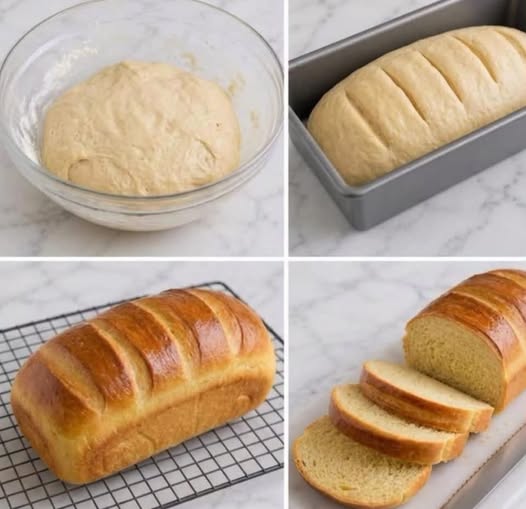
French bread is a classic homemade loaf with a crisp, golden crust and a light, airy center. This simple recipe uses basic pantry ingredients and produces delicious bread perfect for sandwiches, soups, garlic bread, or serving alongside dinner. With a little patience during rising, you can make bakery-style French bread right in your own kitchen.
Ingredients
- 1 ½ cups warm water, about 105–110°F (40–43°C)
- 2 ¼ teaspoons active dry yeast
- 1 tablespoon granulated sugar
- 2 tablespoons olive oil or melted butter
- 1 ½ teaspoons salt
- 4 to 4 ½ cups all-purpose or bread flour
- 1 tablespoon cornmeal, optional
- 1 egg white mixed with 1 tablespoon water, optional for brushing
Instructions
1. Activate the Yeast
Begin by placing the warm water in a large mixing bowl. Add the sugar and active dry yeast. Stir gently and allow the mixture to sit for about 5–10 minutes.
The yeast should become foamy on the surface. This indicates that the yeast is active and ready to use. If there is no foam, the yeast may be inactive, so it is best to start again with fresh yeast.
2. Make the Dough
Add the olive oil and salt to the yeast mixture. Stir to combine.
Add about 3 ½ cups of flour gradually, stirring with a wooden spoon or sturdy spatula. Continue adding flour a little at a time until a soft dough begins to form.
Transfer the dough to a lightly floured work surface. Knead it for approximately 8–10 minutes. Push the dough forward with the heel of your hand, fold it back, rotate it, and repeat.
The finished dough should feel smooth and elastic. It can be slightly tacky, but it should not stick heavily to your hands. Add the remaining flour one tablespoon at a time if necessary.
3. First Rise
Place the dough in a lightly greased bowl, turning it once so the surface is coated with oil. Cover the bowl with a clean kitchen towel or plastic wrap.
Place it somewhere warm and allow the dough to rise for approximately 1–1 ½ hours, or until it has doubled in size.
The rising time can vary depending on room temperature. A warmer kitchen will generally make the dough rise faster, while a cooler room may require additional time.
4. Shape the Bread
Once the dough has doubled, gently press it down to release excess air. Transfer it to a lightly floured surface.
For one large loaf, shape the dough into a long oval or baguette-style loaf. For two smaller loaves, divide the dough evenly and shape each portion into a long, narrow loaf.
Place the shaped dough on a parchment-lined baking sheet. If desired, sprinkle the baking sheet with a little cornmeal before placing the dough on it.
Cover the loaves loosely and let them rest for another 30–45 minutes.
5. Prepare the Oven
While the dough is completing its second rise, preheat your oven to 425°F (220°C).
For a crispier crust, place an empty metal baking pan on the bottom rack while the oven heats. When the bread goes into the oven, carefully add a little hot water to the pan to create steam. Keep your face and hands away from the steam to avoid burns.
6. Score the Loaf
Using a sharp knife or bread lame, make three or four diagonal cuts across the top of each loaf.
These cuts allow the bread to expand properly during baking and give French bread its traditional appearance.
If you want a shiny, darker crust, gently brush the surface with the egg-white mixture before baking. For a more rustic finish, simply leave the dough unbrushed.
7. Bake
Place the bread in the preheated oven. Bake for approximately 20–25 minutes for smaller loaves or 25–30 minutes for a larger loaf.
The bread should become beautifully golden brown and sound hollow when tapped on the bottom.
If the top begins browning too quickly, loosely cover the loaf with aluminum foil during the final portion of baking.
8. Cool Before Slicing
Remove the bread from the oven and transfer it to a wire rack. Allow it to cool for at least 20–30 minutes before slicing.
Although it may be tempting to cut into the loaf immediately, cooling allows the interior to finish setting. Cutting too early can make the center appear gummy.
Tips for Perfect French Bread
Use the right water temperature: Water that is too hot can damage the yeast. Aim for comfortably warm water rather than very hot water.
Do not add too much flour: A slightly soft dough usually produces a lighter loaf. Adding excessive flour can make the bread dense and heavy.
Give the dough enough time to rise: Proper fermentation contributes greatly to the flavor and texture of homemade bread.
Create steam: Steam helps the crust develop a crisp, bakery-style texture. If you do not want to use a water pan, you can lightly mist the oven with water immediately after placing the bread inside.
Cool completely: Allowing the loaf to cool before slicing gives you a better crumb and cleaner slices.
Serving Suggestions
Fresh French bread is incredibly versatile. Slice it and serve with butter, jam, honey, or your favorite spread for breakfast. It also makes an excellent sandwich bread when filled with sliced meats, cheese, vegetables, or chicken.
For dinner, serve warm slices alongside soups, stews, pasta, roasted chicken, or salads. You can also turn leftover bread into garlic bread by spreading it with softened butter, minced garlic, parsley, and a little Parmesan cheese before baking until crisp.
For a sweet option, slightly stale French bread works wonderfully in French toast or bread pudding.
Storage
Store completely cooled French bread in a paper bag or loosely wrapped kitchen towel at room temperature for up to two days. Avoid storing fresh bread in the refrigerator because refrigeration can make bread become stale faster.
For longer storage, wrap the loaf tightly in plastic wrap or foil and place it in a freezer-safe bag. Freeze for up to three months. Thaw at room temperature, then warm it in a 350°F (175°C) oven for several minutes to refresh the crust.