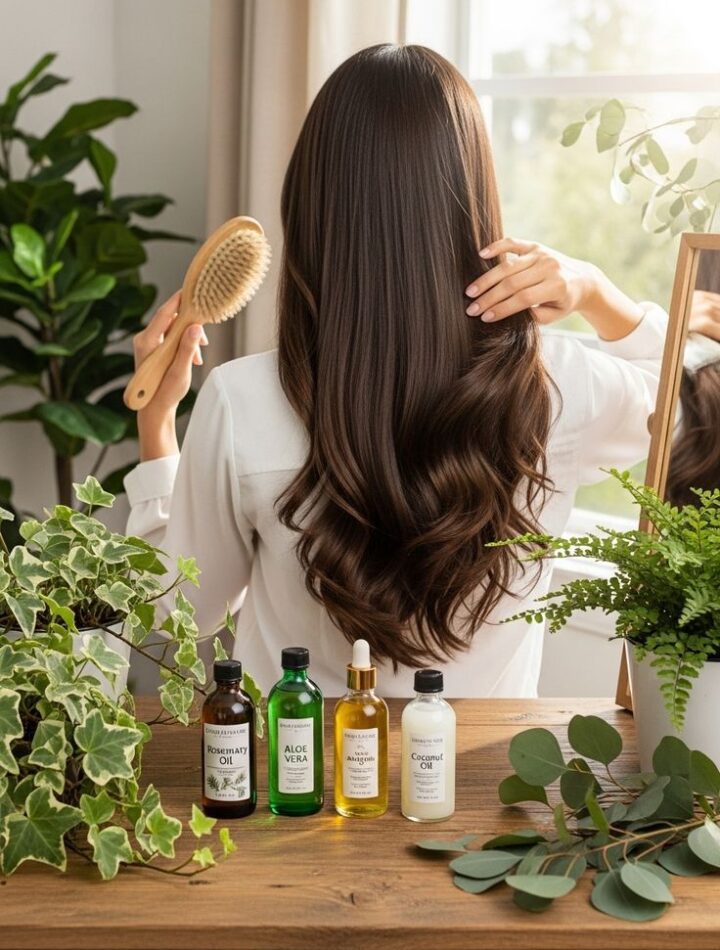
Long, shiny, healthy-looking hair starts with a consistent hair-care routine. This homemade hair oil combines nourishing ingredients that can help moisturize the scalp, reduce dryness, and keep hair feeling softer and stronger. While no oil can guarantee faster hair growth, regular scalp massage and good hair care may support a healthy environment for your hair.
Ingredients
- ½ cup coconut oil
- ¼ cup castor oil
- 2 tablespoons olive oil
- 1 tablespoon dried rosemary
- 1 tablespoon dried fenugreek seeds
- 1 teaspoon vitamin E oil
- 5–8 drops rosemary essential oil, optional
Why These Ingredients Are Used
Coconut oil is a popular hair oil because it helps condition the hair and can reduce the dry, rough feeling that often comes with damaged strands.
Castor oil is thick and rich, making it useful for sealing moisture into dry hair. It is often included in homemade hair treatments, although evidence that it directly increases hair growth is limited.
Olive oil adds softness and helps give the finished oil a smooth texture. It works particularly well for dry or coarse hair.
Rosemary is traditionally used in scalp-care routines. Rosemary-infused oil provides a simple way to incorporate it into a homemade treatment.
Fenugreek seeds are commonly used in traditional hair-care recipes. They can contribute conditioning properties and are especially popular in treatments for dry-feeling hair.
Vitamin E oil is an antioxidant and is often added to homemade beauty products. A small amount can help make the oil feel richer.
Rosemary essential oil provides concentrated rosemary aroma and is optional. Essential oils should always be properly diluted and should not be applied directly to the scalp.
How to Make Long-Hair Oil
Start by measuring the coconut oil, olive oil, dried rosemary, and fenugreek seeds. Place them into a clean heat-safe saucepan or double boiler.
Warm the mixture over very low heat for approximately 10–15 minutes. The goal is to gently infuse the oils rather than fry the herbs. Avoid allowing the oil to smoke or boil.
Turn off the heat and let the mixture cool until it is comfortably warm.
Next, strain the oil through a fine strainer or clean cheesecloth to remove the rosemary and fenugreek seeds. Press gently to extract as much oil as possible without allowing small particles to remain.
Add the castor oil and vitamin E oil to the strained mixture. If you are using rosemary essential oil, add it only after the mixture has cooled. Stir thoroughly.
Transfer the finished oil to a clean, dry, dark-colored glass bottle with a secure lid.
How to Use It
Before applying the oil, perform a small patch test, particularly if you have sensitive skin or are using essential oils.
Part your hair into sections and apply a small amount of oil directly to the scalp. Using your fingertips, gently massage the scalp for 5–10 minutes. Avoid scratching with your fingernails.
After massaging the scalp, distribute a small amount through the lengths and ends of your hair. Concentrate on areas that feel particularly dry.
Leave the oil on for approximately 30 minutes to 2 hours. If your scalp tolerates the treatment well, some people prefer leaving a small amount on overnight, but this is not necessary.
Wash your hair thoroughly with a gentle shampoo. Because castor oil is thick, you may need to shampoo twice. Follow with your normal conditioner.
Use this treatment once or twice a week rather than applying large amounts every day.
Tips for Healthier, Longer Hair
Hair growth occurs naturally from follicles, so the most important goal is protecting the hair you already have while maintaining a healthy scalp.
Avoid using excessive heat from straighteners, curling irons, and blow dryers. When heat styling is necessary, use a suitable heat-protective product.
Try not to pull the hair tightly into ponytails or buns every day. Repeated tension can contribute to hair breakage.
Use a wide-tooth comb to gently detangle wet hair, beginning at the ends and gradually moving upward.
Regularly trimming split ends does not make hair grow faster from the scalp, but it can help prevent splits from traveling farther up the hair shaft.
A balanced diet containing adequate protein, vitamins, minerals, and healthy fats is also important for normal hair growth.
Storage
Store your homemade oil in a cool, dark place away from direct sunlight and moisture. Because this recipe contains dried herbs and no water-based ingredients, it can generally keep for several weeks when prepared and stored hygienically.
If the oil develops an unusual smell, changes appearance significantly, or causes irritation, discard it.
Important Safety Notes
Natural ingredients can still cause allergic reactions or irritation. Test a small amount on your skin before using the oil extensively. Keep essential oils away from the eyes and never use undiluted essential oils directly on the scalp.
If you experience sudden hair loss, bald patches, significant scalp irritation, or persistent shedding, consider speaking with a dermatologist or other qualified healthcare professional. Hair loss can have many causes, and an oil treatment may not address the underlying problem.
Final Thoughts
This homemade long-hair oil is a simple, nourishing addition to a regular hair-care routine. Coconut oil, castor oil, olive oil, rosemary, and fenugreek create a rich treatment designed to moisturize the scalp and condition the hair. The key is consistency: gentle scalp massage, reduced breakage, careful handling, and a healthy overall routine can help your hair look stronger, softer, and healthier as it grows.