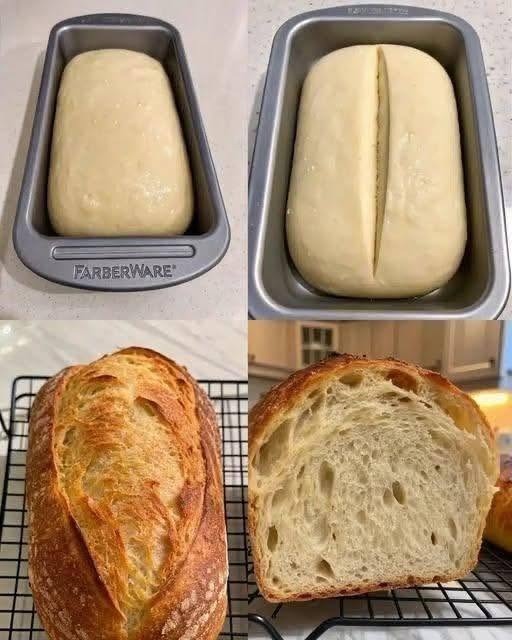
There is something wonderfully satisfying about baking a loaf of homemade sourdough bread. With its golden, crisp crust, soft chewy interior, and beautiful open crumb, this simple loaf is perfect for breakfast, sandwiches, toast, or serving alongside soup. The loaf shown here is baked in a standard loaf pan, making it especially approachable for beginners who may not have a Dutch oven or specialty bread-baking equipment.
This recipe uses an active sourdough starter and a long fermentation to develop flavor and texture. The dough is mixed gently, strengthened through a few rounds of stretching and folding, allowed to rise, shaped, and finally baked until beautifully browned.
Ingredients
- 100 g active sourdough starter
- 350 g lukewarm water
- 500 g bread flour
- 10 g salt
- 1 tablespoon honey or sugar, optional
- 1 tablespoon olive oil or melted butter, optional
- Extra flour for shaping
- A little oil or butter for greasing the loaf pan
For the best results, use an active starter that has recently been fed and is bubbly, expanded, and pleasantly sour-smelling. A strong starter is important because it provides the natural leavening needed to make the bread rise.
Prepare the Dough
Begin by adding the lukewarm water and active sourdough starter to a large mixing bowl. Stir until the starter is mostly dissolved. If using honey, sugar, olive oil, or melted butter, add it now and mix well.
Add the bread flour and stir with a wooden spoon or sturdy spatula until no large patches of dry flour remain. The dough will look rough and sticky at this stage, and that is completely normal.
Cover the bowl and let the dough rest for about 30 minutes. This short resting period allows the flour to absorb the water and helps the dough become easier to handle.
After resting, sprinkle the salt over the dough. Wet your hand and gently pinch, fold, and squeeze the dough until the salt is evenly incorporated.
Stretch and Fold
Instead of kneading the dough vigorously, use a series of gentle stretch-and-fold movements. With damp hands, grab one side of the dough, stretch it upward without tearing it, and fold it over the center. Turn the bowl and repeat on all four sides.
Cover the dough and let it rest for 30 minutes.
Repeat the stretch-and-fold process every 30 minutes for the first two hours. You should notice that the dough gradually becomes smoother, stronger, and more elastic.
If the dough is extremely sticky, resist the temptation to add large amounts of flour. A slightly sticky dough can produce a lighter loaf with a softer, more open crumb.
First Rise
After the final stretch and fold, cover the bowl and allow the dough to rise at room temperature.
Depending on the temperature of your kitchen and the strength of your starter, this can take approximately 4 to 8 hours. The dough does not necessarily need to double in size. Look for a noticeable increase in volume, bubbles around the edges, and a soft, airy appearance.
A warmer kitchen will speed fermentation, while a cool kitchen will slow it down. Sourdough baking is flexible, so use the appearance and feel of the dough as your guide rather than relying only on the clock.
Shape the Loaf
Lightly flour your work surface and carefully turn the dough out of the bowl. Try not to press all the air from the dough.
Gently shape it into a rough rectangle. Fold the top portion toward the center, then fold the bottom portion upward. Roll the dough into a log, creating enough surface tension to help the loaf hold its shape.
Grease a standard loaf pan with a little butter or oil. Place the shaped dough into the pan with the seam underneath.
Cover loosely with a clean towel, reusable cover, or plastic wrap.
Final Proof
Allow the shaped loaf to proof at room temperature until it becomes visibly puffy and expanded. This may take 1 to 4 hours depending on your environment.
For a more convenient schedule, you can place the covered loaf in the refrigerator and let it proof overnight. Cold fermentation can also deepen the sourdough flavor.
Before baking, the dough should feel airy and soft. If you gently press it with a floured finger, the indentation should slowly spring back.
Score and Bake
Preheat your oven to 450°F (230°C). If desired, place a shallow oven-safe pan on a lower rack while the oven heats. Creating steam during the beginning of baking can help the crust develop beautifully.
Just before baking, use a sharp bread lame or thin knife to make one long slash down the center of the loaf. The cut should be about ½ inch deep. This gives the bread a controlled place to expand as it rises in the oven.
Place the loaf pan in the preheated oven. If using a separate pan for steam, carefully add a little hot water to it immediately after placing the bread inside.
Bake at 450°F for about 15 minutes. Then reduce the temperature to 400°F (205°C) and continue baking for approximately 25 to 30 minutes.
The finished loaf should have a deep golden-brown crust and sound hollow when gently tapped. If the top is browning too quickly, loosely cover it with aluminum foil during the final portion of baking.
Cool Completely
Remove the bread from the pan and place it on a wire rack. Allow it to cool for at least 1 to 2 hours before slicing.
This waiting period is important because the crumb continues to set as the loaf cools. Cutting into very hot bread can make the interior appear gummy even when the loaf is fully baked.
Once cooled, slice with a serrated bread knife. You should have a crisp, flavorful crust surrounding a soft, slightly chewy interior with attractive air pockets.
Helpful Tips
For the best sourdough bread, always begin with a healthy, active starter. If your starter has been sitting in the refrigerator, feed it and allow it to become bubbly and active before preparing the dough.
Water temperature also matters. Lukewarm water encourages fermentation, but very hot water can damage the natural yeast in your starter.
Avoid adding too much flour while shaping. The dough may feel sticky, but excessive flour can make the finished loaf dense.
Fermentation time will vary considerably. Watch the dough rather than following the clock exactly.
For extra flavor, refrigerate the shaped loaf overnight and bake it the following morning.
Serving Ideas
This homemade sourdough is delicious simply sliced and spread with butter. Toast it and top with eggs, avocado, cheese, jam, or honey. It also makes excellent sandwiches, grilled cheese, French toast, and croutons.
Store the cooled loaf at room temperature in a bread bag or loosely wrapped in a clean kitchen towel. For longer storage, slice the bread and freeze it in an airtight container. Individual slices can be toasted directly from frozen.
With only a few basic ingredients and a little patience, you can create a beautiful bakery-style sourdough loaf at home. The crisp crust, tender crumb, and naturally fermented flavor make this a recipe worth repeating whenever you want fresh homemade bread.