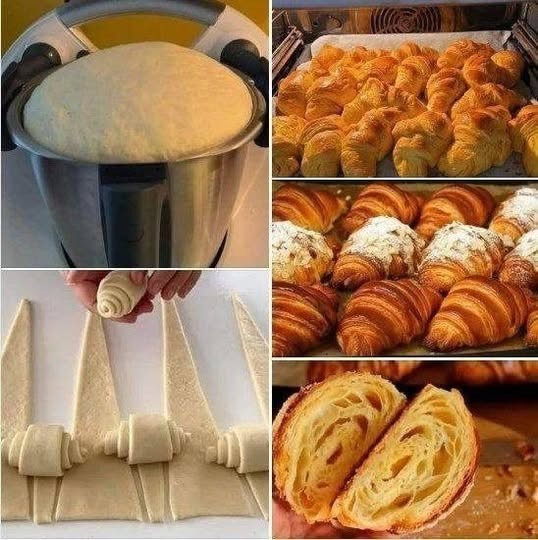
There is nothing quite like a freshly baked croissant: crisp, golden layers on the outside with a soft, buttery, airy center. Making croissants at home can seem intimidating because of the laminating process, but using a Thermomix makes preparing the dough much easier. Once the dough is mixed and chilled properly, the key is patience while folding and rolling the butter into beautiful layers.
This Thermomix croissant recipe produces bakery-style pastries that are wonderfully flaky, rich, and golden. They are perfect for breakfast, brunch, afternoon coffee, or a special weekend treat.
Ingredients
For the Dough
- 500 g strong white bread flour
- 60 g caster sugar
- 10 g instant dried yeast
- 10 g fine salt
- 300 g cold milk
- 30 g unsalted butter, softened
- 1 large egg, optional, for a richer dough
For Laminating
- 250 g cold unsalted butter
For the Egg Wash
- 1 egg
- 1 tablespoon milk
Prepare the Dough
Add the milk, yeast, sugar, flour, salt, softened butter, and egg if using to the Thermomix bowl. Knead according to your Thermomix model’s dough setting until the ingredients come together into a smooth, elastic dough.
The dough should feel soft and slightly tacky but should not be excessively sticky. Avoid adding too much flour, as a firm dough can make the finished croissants heavy rather than light and airy.
Transfer the dough to a lightly floured work surface and shape it into a neat rectangle. Cover it well and refrigerate for at least 1 hour, or preferably overnight. Chilling the dough is important because it slows fermentation and makes the dough easier to roll.
Prepare the Butter
Place the cold butter between two sheets of baking paper. Using a rolling pin, gently pound and roll the butter into a rectangle approximately 15 x 20 cm.
Try to keep the butter evenly thick from edge to edge. This is important because the butter needs to remain inside the dough during rolling and folding.
Place the butter in the refrigerator if it becomes too soft. Ideally, the butter and dough should have a similar firmness when you begin laminating.
First Lamination
Roll the chilled dough into a rectangle roughly twice the size of your butter block. Place the butter in the center, then fold the dough over it so the butter is completely enclosed.
Press the seams together gently to prevent the butter from escaping.
Roll the dough into a long rectangle, working from the center outward. Do not press too aggressively. If the butter begins to soften or squeeze through the dough, stop and refrigerate the dough for 20–30 minutes.
Fold the dough into thirds, like a letter. This is your first fold.
Wrap the dough and refrigerate for about 30 minutes.
Repeat the Folds
Remove the chilled dough and turn it so the open edge is facing you. Roll it into another long rectangle and fold it into thirds again.
Refrigerate for another 30 minutes.
Repeat the rolling and folding one more time. After three folds, the dough will contain many thin layers of dough and butter.
Always keep the dough cold between folds. If it becomes difficult to roll, resist the temptation to force it. Chilling it briefly will make the process much easier and help preserve the layers.
Shape the Croissants
After the final chilling period, roll the dough into a large rectangle about 4–5 mm thick.
Trim the edges with a sharp knife to create a neat rectangle. This gives the croissants cleaner layers.
Cut the dough into long triangles. Each triangle should have a wide base and a pointed tip.
Make a small slit in the center of the wide end of each triangle. Gently stretch the triangle lengthwise, then roll it from the wide end toward the point.
Do not roll the croissants too tightly. The layers need room to expand during proofing and baking.
Place each croissant on a parchment-lined baking tray with the pointed tip tucked underneath.
Proof the Croissants
Cover the shaped croissants loosely and leave them at room temperature until they become noticeably puffy and light.
Depending on the temperature of your kitchen, this can take approximately 1½–3 hours.
The croissants should look inflated, and the layers should be visible. Avoid placing them somewhere very hot because excessive heat can melt the butter before baking.
A properly proofed croissant should gently wobble when the tray is moved.
Bake
Preheat your oven to 200°C (400°F).
Whisk together the egg and milk to make the egg wash. Brush the croissants gently, avoiding excessive pressure that could deflate them.
Place the tray in the oven and bake for approximately 18–22 minutes, or until the croissants are deeply golden, crisp, and cooked through.
If they brown too quickly, reduce the oven temperature slightly for the remaining baking time.
Allow the croissants to cool on a wire rack for at least 10–15 minutes before serving. The interior will continue to set as they cool.
Tips for Perfect Croissants
Keep everything cold: Cold butter is essential for distinct flaky layers. If the butter becomes soft, refrigerate the dough before continuing.
Don’t rush the process: Croissants require several periods of chilling and proofing. These resting stages help develop flavor and structure.
Roll gently: Excessive pressure can squeeze the butter out of the dough and destroy the layers.
Use good-quality butter: Butter with a pleasant flavor and suitable firmness works best for laminating.
Watch the proofing: Under-proofed croissants can be dense, while over-proofed croissants may lose their structure.
Bake until properly golden: A pale croissant may look finished on the outside while remaining underbaked inside. Look for a rich golden-brown color.
Serving Suggestions
Fresh Thermomix croissants are delicious served warm with butter and jam, honey, chocolate spread, or fruit preserves. They can also be filled with ham and cheese for a savory breakfast or used to make elegant brunch sandwiches.
For a sweet variation, add chocolate sticks before rolling the triangles to make pain au chocolat-style pastries. You can also fill baked croissants with pastry cream, berries, or almond filling.
Storage
Croissants are best eaten on the day they are baked. Store leftovers in an airtight container for up to two days and warm them briefly in the oven before serving.
For longer storage, baked croissants can be frozen once completely cool. Reheat them directly from frozen in a moderate oven until crisp and warmed through.
With a little patience and careful temperature control, your Thermomix can help you create homemade croissants with crisp, buttery layers and a beautifully tender center. The process takes time, but the aroma and texture of freshly baked croissants make every fold worthwhile.