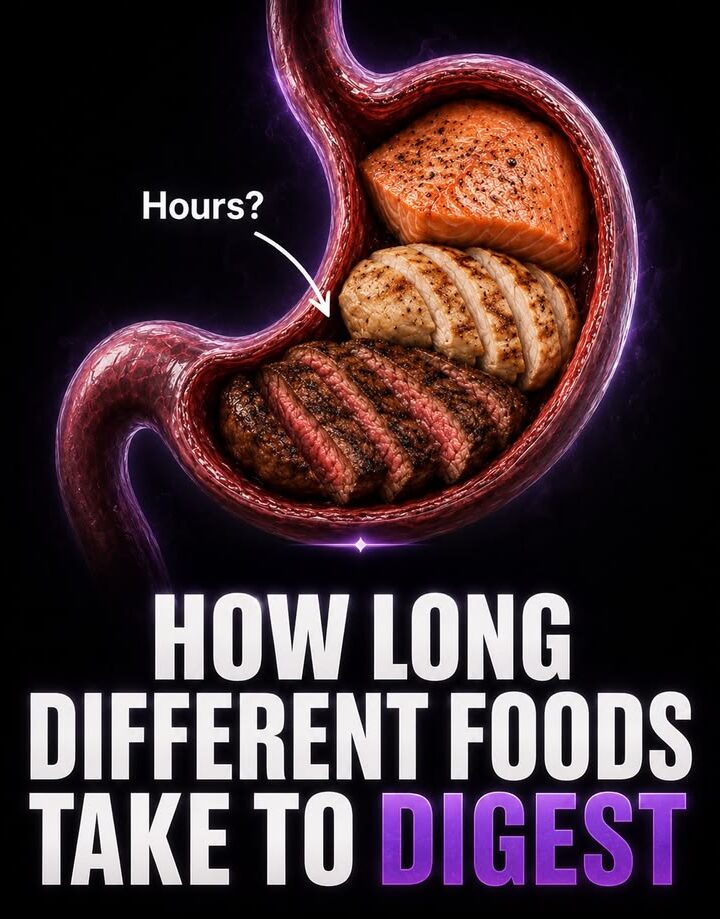
Digestion is the process your body uses to break food down into nutrients that can be absorbed and used for energy, growth, and repair. Although people often talk about foods taking a specific number of hours to “digest,” there is no exact digestion time for every food. The process varies depending on the food itself, portion size, preparation method, fiber and fat content, hydration, and individual digestive health.
Some foods move through the stomach relatively quickly, while heavier meals can remain there longer. Understanding approximate digestion times can help you plan balanced meals and better understand how different foods affect feelings of fullness and energy.
1. Water
Water does not require digestion. It can pass from the stomach into the small intestine fairly quickly, where much of it is absorbed. How quickly this happens depends on hydration status, stomach contents, and how much water you drink.
Drinking water throughout the day supports normal digestion and helps fiber work properly.
2. Fruits
Many fresh fruits are relatively easy to digest because they contain water, natural sugars, and varying amounts of fiber. Examples include watermelon, oranges, grapes, peaches, and berries.
Fruit may leave the stomach within roughly 30 minutes to 2 hours, although this is only an estimate. Fruits containing more fiber may take longer than very watery fruits.
Whole fruit is generally more filling than fruit juice because the intact fruit contains fiber.
3. Cooked Vegetables
Cooked vegetables such as carrots, zucchini, squash, and spinach are often easier to digest than some raw vegetables because cooking softens their structure.
Depending on the type and quantity, vegetables may take approximately 1–3 hours to move through the stomach and continue through the digestive tract.
Cooking vegetables does not remove all their nutritional value and can make them easier for some people to tolerate.
4. Raw Vegetables
Raw vegetables contain fiber and water, but their tougher plant structure can require more digestive processing. Foods such as cabbage, broccoli, carrots, and leafy greens can therefore feel more substantial than softer cooked vegetables.
A meal containing raw vegetables may remain in the stomach for approximately 1–3 hours or longer, depending on what else is eaten with it.
5. Rice and Other Grains
White rice is relatively low in fiber and is often digested more quickly than high-fiber whole grains. Brown rice, oats, barley, and whole-grain breads contain more fiber and may take longer to digest.
A grain-based meal may spend approximately 1–3 hours in the stomach, but complete gastrointestinal transit takes much longer.
6. Bread and Crackers
Refined bread, crackers, and similar carbohydrate-rich foods are generally broken down relatively efficiently. Foods containing whole grains, seeds, or substantial fiber may digest more slowly.
A simple carbohydrate-rich food may take approximately 1–3 hours in the stomach, although the total digestive process continues afterward.
7. Eggs
Eggs provide protein and fat, both of which generally slow stomach emptying compared with simple carbohydrates.
A meal containing eggs may take approximately 2–4 hours to leave the stomach, depending on preparation and what accompanies them. Boiled, poached, scrambled, or fried eggs can have different effects because added fats change the meal’s composition.
8. Fish
Fish is an excellent source of protein, and many types of fish are relatively lean. Lean fish may be processed somewhat more quickly than very fatty foods.
A fish-containing meal may remain in the stomach for approximately 2–4 hours, although fatty fish or meals prepared with substantial oil may take longer.
9. Chicken and Turkey
Poultry contains protein and, depending on the cut and preparation, varying amounts of fat. A simple grilled chicken breast may be easier to digest than fried chicken with a heavy coating and rich sauce.
A protein-rich poultry meal can take approximately 2–4 hours or longer to leave the stomach.
10. Beef and Other Red Meat
Red meat generally contains more protein and sometimes more fat than many plant foods. Fat slows gastric emptying, so a large steak meal can feel heavy for several hours.
A meal containing beef may remain in the stomach for approximately 3–5 hours or longer, depending on the cut, portion size, cooking method, and accompanying foods.
11. Cheese and Other High-Fat Dairy Foods
Cheese contains protein and fat, which can make it slower to leave the stomach. Hard, full-fat cheeses may feel particularly filling.
Depending on the quantity and fat content, dairy foods may take approximately 2–5 hours to move through the stomach.
Milk and yogurt can behave differently because they contain more liquid and may be processed differently from solid cheese.
12. Nuts and Seeds
Nuts and seeds contain healthy fats, protein, and fiber. This combination makes them nutrient-dense and generally satisfying, but it can also slow digestion compared with foods consisting primarily of simple carbohydrates.
A serving of nuts may take approximately 2–4 hours or longer to leave the stomach.
13. Beans and Lentils
Beans, chickpeas, peas, and lentils are rich in protein and fiber. Their fiber content supports regular bowel movements but can also cause gas or bloating in people who are not accustomed to eating legumes.
Legume-containing meals may take several hours to move through the stomach, while their fiber continues to interact with gut bacteria farther along the digestive tract.
14. Fried and High-Fat Foods
Fried chicken, French fries, creamy dishes, pastries, and other high-fat foods often take longer to leave the stomach because fat slows gastric emptying.
A rich, high-fat meal can remain in the stomach for 4–6 hours or sometimes longer. This is one reason people may feel especially full or sluggish after a very heavy meal.
Digestion Is Different From Total Transit Time
One of the most important things to understand is that “digestion time” and “how long food stays in the body” are not the same thing.
Food can leave the stomach after several hours, but digestion and absorption continue in the small intestine. Material that cannot be absorbed moves into the large intestine, where water is removed and gut bacteria process some of the remaining material.
The complete journey through the digestive tract can take many hours to several days, depending on the individual and the food consumed.
What Can Affect Digestion Time?
Several factors can change how quickly food moves through your digestive system:
- Portion size: Larger meals generally take longer to process.
- Fat content: Fat tends to slow stomach emptying.
- Fiber: Fiber can slow digestion while supporting healthy bowel function.
- Protein: Protein-rich meals generally take longer to process than simple carbohydrates.
- Cooking method: Cooked foods may be easier to digest than some raw foods.
- Hydration: Adequate fluid intake supports normal digestive function.
- Physical activity: Movement can influence gastrointestinal motility.
- Individual differences: Age, medications, stress, digestive conditions, and overall health can affect digestion.