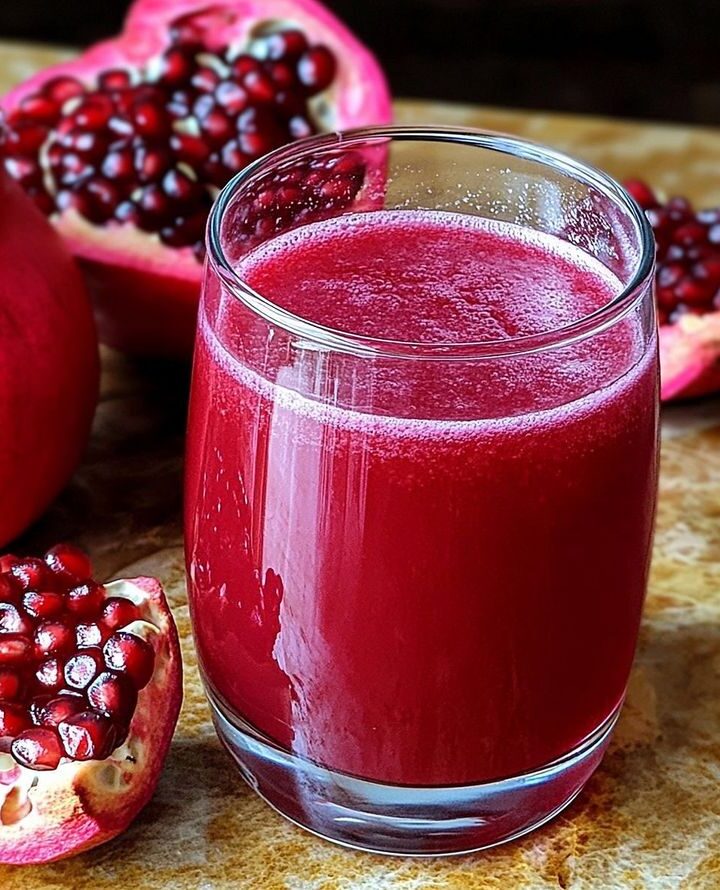
Pomegranate juice is a refreshing, vibrant, and nutrient-rich drink that is easy to prepare at home. Made from fresh pomegranates, this naturally sweet and slightly tart beverage contains no artificial colors, flavors, or preservatives. Preparing your own juice allows you to enjoy the authentic taste of the fruit while controlling the sweetness and ensuring maximum freshness. Whether served as a healthy breakfast drink, an afternoon refresher, or a festive beverage for family gatherings, homemade pomegranate juice is both delicious and satisfying.
Ingredients
- 3–4 large ripe pomegranates
- 1 cup cold water (optional, for a lighter consistency)
- 1–2 teaspoons honey or sugar (optional)
- Ice cubes, for serving
- Fresh mint leaves or lemon slices for garnish (optional)
Equipment
- Sharp knife
- Large bowl
- Blender
- Fine-mesh strainer or cheesecloth
- Large spoon
- Serving glasses
Preparation Steps
Step 1: Select Fresh Pomegranates
Choose ripe pomegranates that feel heavy for their size. A heavier fruit generally contains more juice. The skin should be firm, smooth, and free from major cracks or bruises. Deep red or reddish-pink fruits often provide the best flavor.
Step 2: Prepare the Fruit
Wash the pomegranates thoroughly under running water. Using a sharp knife, cut off the crown at the top. Score the skin lightly into four or six sections without cutting too deeply into the seeds. Place the fruit in a bowl of water and gently pull it apart into sections. The seeds, called arils, will sink to the bottom while most of the white membrane floats, making it easier to separate them.
Step 3: Remove the Seeds
Discard the peel and white membrane, then collect the bright red arils. Drain the water and transfer the seeds to a clean bowl. This method reduces mess and helps prevent the juice from becoming bitter, as the white pith can affect the flavor.
Step 4: Blend the Seeds
Place the pomegranate seeds into a blender. Pulse gently for about 10–15 seconds. The goal is to break the seeds open and release the juice without crushing the hard inner seed too much, which may add bitterness. If you prefer a thinner juice, add up to one cup of cold water before blending.
Step 5: Strain the Juice
Pour the blended mixture through a fine-mesh strainer or cheesecloth into a large bowl or jug. Use the back of a spoon to press the pulp and extract as much juice as possible. Discard the remaining pulp and seeds.
Step 6: Adjust the Flavor
Taste the fresh juice. If your pomegranates are naturally sweet, no additional sweetener may be needed. If desired, stir in honey or sugar until dissolved. For a brighter flavor, you can also add a small squeeze of fresh lemon juice.
Step 7: Chill and Serve
Pour the juice into glasses filled with ice cubes. Garnish with fresh mint leaves or a slice of lemon for an attractive presentation. Serve immediately for the freshest flavor and maximum nutritional value.
Tips for the Best Pomegranate Juice
- Use fully ripe fruit for the sweetest and juiciest results.
- Avoid over-blending, as crushing the inner seeds too much can make the juice bitter.
- Chill the pomegranates before juicing for a naturally cool and refreshing drink.
- Drink the juice soon after preparation to enjoy its fresh taste and vibrant color.
- Store leftover juice in an airtight glass container in the refrigerator for up to two days. Shake well before serving, as natural separation may occur.
Flavor Variations
Homemade pomegranate juice is versatile and pairs well with many fruits and herbs. Try mixing it with orange juice for extra sweetness and vitamin C, or blend it with apple juice for a milder flavor. A few fresh mint leaves provide a cooling touch, while a small piece of ginger adds warmth and spice. For a tropical twist, combine pomegranate juice with pineapple juice. Sparkling water can also be added just before serving to create a refreshing fizzy drink.
Nutritional Benefits
Pomegranate juice is known for its rich supply of vitamins, minerals, and antioxidants. It contains vitamin C, vitamin K, potassium, and naturally occurring plant compounds called polyphenols. These antioxidants help protect cells from oxidative stress. The juice also provides hydration and can be a flavorful way to include more fruit in your diet. Because it naturally contains fruit sugars, it is best enjoyed in moderate portions as part of a balanced diet.
Serving Suggestions
Fresh pomegranate juice is delicious on its own, but it also pairs well with breakfast dishes such as oatmeal, yogurt, pancakes, or whole-grain toast. It can be served alongside light lunches, salads, grilled vegetables, or roasted chicken. During celebrations, pour it into elegant glasses with mint and pomegranate seeds for a colorful, festive presentation. You can also freeze the juice into ice cubes and use them to chill water, smoothies, or mocktails without diluting the flavor.
Conclusion
Making fresh pomegranate juice at home is simple, rewarding, and healthier than many store-bought alternatives. With just a few ripe pomegranates and basic kitchen equipment, you can prepare a vibrant drink that highlights the fruit’s natural sweetness and refreshing tartness. By following the steps above and experimenting with different flavor combinations, you can create a delicious beverage suitable for everyday enjoyment or special occasions. Homemade pomegranate juice is a refreshing way to enjoy seasonal fruit while adding a burst of color and flavor to your table.