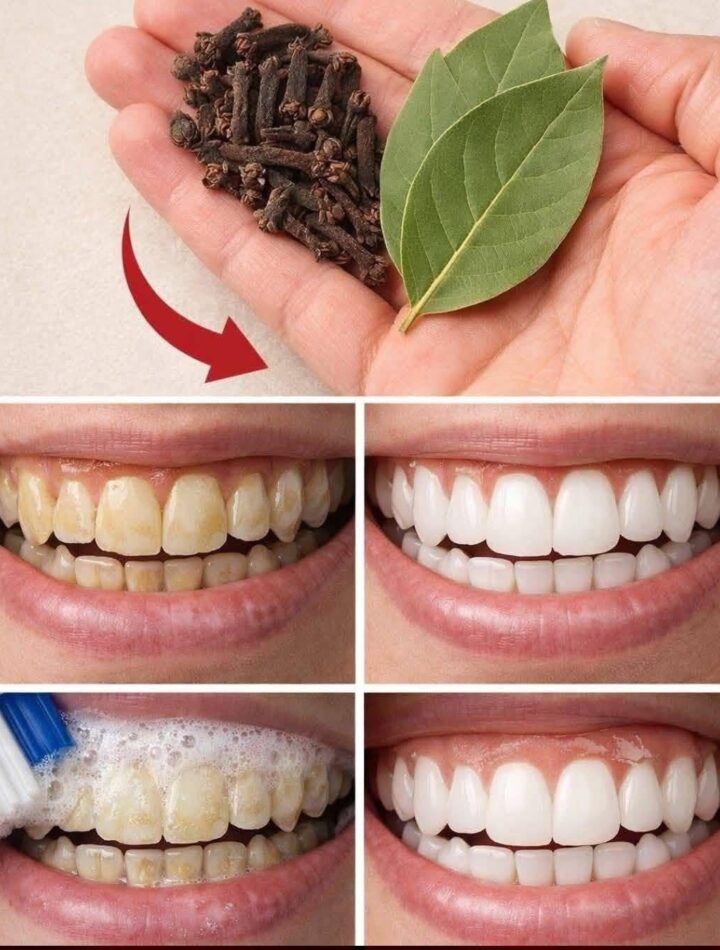
Cloves and bay leaves are popular kitchen spices that have also been used traditionally in natural oral-care routines. The image accompanying this recipe suggests that a combination of cloves and bay leaves can dramatically whiten teeth. While these ingredients may have useful properties, it is important to separate traditional use from proven teeth-whitening effects.
Cloves contain eugenol, a naturally occurring compound that has antimicrobial and soothing properties. Research has found promising activity from clove and clove-based formulations against microorganisms associated with plaque and gum problems. However, current evidence does not establish a simple homemade clove-and-bay-leaf mixture as a reliable replacement for professional whitening or fluoride toothpaste.
Bay leaf has also attracted interest in oral-care research. One study examining toothpaste formulated with bay leaf essential oil reported an effect on extrinsic, or surface, stains comparable to a commercial toothpaste under the study conditions. This is interesting, but it does not mean that rubbing bay leaves directly on teeth will produce dramatic whitening.
Simple Clove and Bay Leaf Mouth Rinse
Ingredients
- 1 cup water
- 1 teaspoon whole cloves
- 1 small dried bay leaf
- Optional: a small piece of cinnamon stick for flavor
Instructions
- Pour the water into a small saucepan.
- Add the cloves and bay leaf.
- Bring the mixture to a gentle boil.
- Reduce the heat and simmer for approximately 5–10 minutes.
- Turn off the heat and allow the mixture to cool completely.
- Strain through a fine strainer.
- Transfer the liquid to a clean container and refrigerate.
- Use a small amount as a gentle mouth rinse, then spit it out.
For hygiene, prepare small batches rather than storing homemade herbal rinses for long periods. Do not swallow the rinse.
What Can Cloves Do for Your Mouth?
Cloves are particularly interesting because of their eugenol content. Laboratory research has demonstrated antimicrobial activity against several microorganisms associated with oral biofilms. Clove-containing mouthrinses and toothpaste formulations have also been investigated for plaque and gingivitis control.
This does not, however, mean cloves can remove cavities or cure gum disease. Their potential benefit is better understood as an adjunct to normal oral hygiene.
Clove-based oral-care products have shown promising results in some clinical studies, but recent reviews emphasize that much of the evidence remains laboratory-based or comes from relatively small clinical studies. More high-quality research is needed before clove preparations can be considered established dental treatments.
What About Bay Leaves?
Bay leaves are less extensively studied than cloves for oral care. Nevertheless, research into bay leaf essential oil toothpaste has produced an interesting finding: the formulation demonstrated an ability to remove extrinsic tooth stains.
Extrinsic stains are discolorations on the outside of the tooth associated with things such as coffee, tea, tobacco, and certain foods. Removing these surface stains can make teeth appear brighter.
That is different from changing the natural internal color of the tooth.
Therefore, a bay-leaf preparation should not be presented as a guaranteed whitening treatment. The attractive before-and-after photographs commonly used online can also be misleading because lighting, camera exposure, professional cleaning, and image editing can dramatically change how teeth appear.
Can This Mixture Really Whiten Teeth?
Possibly, it may help freshen the mouth or contribute to removal of some surface debris when incorporated into an appropriate oral-care product, but there is not strong evidence that a homemade clove-and-bay-leaf rinse dramatically whitens teeth.
The American Dental Association notes that there is not reliable scientific evidence for many popular natural whitening methods and recommends established oral-hygiene and whitening approaches instead.
For genuinely whiter-looking teeth, brushing twice daily for two minutes, cleaning between the teeth daily, limiting staining foods and drinks, avoiding tobacco, and having regular dental cleanings are much more dependable strategies.
A Safer Way to Use the Ingredients
If you enjoy natural oral-care ingredients, using cloves and bay leaves as a mild occasional rinse is preferable to aggressively rubbing whole spices or powders against your teeth.
Avoid scrubbing teeth with coarse spice particles because excessive abrasion can damage tooth surfaces over time. Also avoid placing concentrated clove essential oil directly onto the gums or teeth. Concentrated preparations can irritate oral tissues, and clove products should be used carefully.
People with sensitive gums, mouth sores, allergies, dental restorations, or existing dental problems should be especially cautious.
Important Dental Care Tips
A homemade rinse should never replace fluoride toothpaste. Fluoride toothpaste has strong evidence for helping prevent tooth decay, while brushing physically removes plaque from the tooth surface.
If your teeth suddenly become yellow, develop dark spots, or change color significantly, the cause may not simply be surface staining. Plaque buildup, tartar, decay, enamel wear, medications, smoking, and changes within the tooth can all contribute to discoloration.
Professional cleaning can often remove hardened tartar and surface stains that a home rinse cannot.
For persistent discoloration, a dentist can determine whether professional whitening, an appropriate whitening toothpaste, or another treatment is suitable.