Few breakfasts are as comforting as a tall stack of warm, fluffy pancakes. With golden edges, a soft center, and a lightly sweet flavor, classic pancakes are simple enough for a weekday morning yet special enough for a relaxed weekend brunch. This recipe uses everyday ingredients and a combination of baking powder and baking soda to help create a light, airy texture. Buttermilk also adds tenderness and a subtle tang. (Food Network)
Ingredients
For the pancakes:
- 2 cups all-purpose flour
- 2 tablespoons granulated sugar
- 2 teaspoons baking powder
- 1/2 teaspoon baking soda
- 1/2 teaspoon salt
- 2 large eggs
- 1 3/4 cups buttermilk
- 4 tablespoons unsalted butter, melted and slightly cooled
- 1 teaspoon vanilla extract
- Extra butter or neutral oil for cooking
For serving:
- Butter
- Maple syrup
- Fresh berries
- Sliced bananas
- Powdered sugar, optional
- Chocolate chips, optional
Buttermilk works especially well because its acidity reacts with baking soda, helping the pancakes rise while contributing a tender texture. (Food Network)
Instructions
1. Prepare the dry ingredients
Start by placing the flour, sugar, baking powder, baking soda, and salt into a large mixing bowl. Whisk everything together until evenly distributed.
Mixing the dry ingredients first helps prevent pockets of baking powder or baking soda from ending up in individual pancakes. If your flour is lumpy, you can sift it before combining the ingredients.
2. Mix the wet ingredients
In a separate bowl, whisk together the eggs, buttermilk, melted butter, and vanilla extract. The melted butter should be warm rather than piping hot so it does not cook the eggs when combined.
For the best texture, room-temperature ingredients can be helpful, although the recipe will still work if your ingredients are slightly chilled. (Food Network)
3. Combine the batter
Make a small well in the center of the dry ingredients. Pour in the buttermilk mixture and gently stir with a whisk or rubber spatula.
Do not overmix. Stop as soon as the flour has been incorporated. A few small lumps are completely fine and are actually preferable to a perfectly smooth batter. Overmixing develops gluten, which can make pancakes chewy and dense instead of soft and fluffy. (Food Network)
The finished batter should be thick but pourable. If it seems unusually thick, add a tablespoon or two of buttermilk until it reaches the right consistency.
4. Let the batter rest
Allow the batter to sit for about 5 to 10 minutes. This gives the flour time to hydrate and allows the leavening ingredients to begin working.
While the batter rests, heat a large nonstick skillet or griddle over medium-low to medium heat.
5. Cook the pancakes
Lightly grease the hot pan with butter or a small amount of neutral oil.
Pour approximately 1/4 cup of batter onto the skillet for each pancake. Leave enough space between pancakes so you can easily flip them.
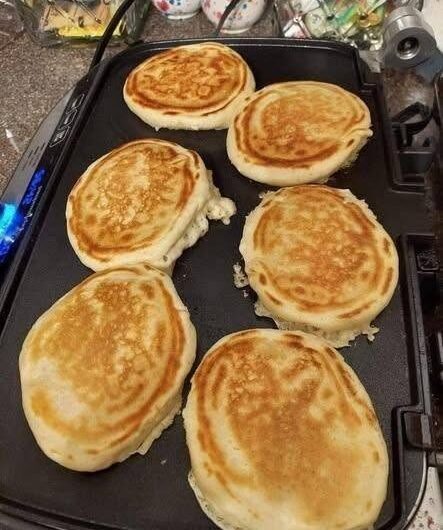
Cook until bubbles begin appearing across the surface and the edges look slightly set. Depending on your pan and heat level, this usually takes about 2 to 3 minutes.
Carefully slide a spatula underneath and flip the pancake. Cook the second side for approximately 1 to 2 minutes, or until golden brown and cooked through. (Food Network)
Avoid pressing down on the pancakes with your spatula. Doing so can squeeze out the air that gives them their fluffy texture.
Continue cooking until all the batter has been used. Add a little more butter to the skillet between batches if needed.
How to Keep Pancakes Fluffy
The biggest secret is not overmixing the batter. Small lumps are desirable. Another important factor is controlling the temperature of your skillet. If the pan is too hot, the outside may brown before the center cooks. If it is too cool, the pancakes can become pale and take too long to rise.
A medium-low to medium heat generally works well. Look for a golden-brown first side with bubbles forming on top before flipping.
If you’re preparing a large batch, keep finished pancakes warm in a low oven while you cook the remaining batter. A wire rack can help prevent the bottoms from becoming soggy. (Food Network)
Easy Variations
Once you have the basic pancake recipe mastered, you can easily customize it.
For blueberry pancakes, gently fold fresh or frozen blueberries into the batter just before cooking.
For chocolate chip pancakes, sprinkle a few chocolate chips over each pancake after pouring the batter into the skillet.
For banana pancakes, add thinly sliced ripe banana to the batter or place slices directly onto each pancake while the first side cooks.
You can also add a pinch of cinnamon, a little extra vanilla, chopped pecans, or a small amount of lemon zest for a different flavor.
Serving Suggestions
Serve these pancakes immediately while they’re warm. Add a small pat of butter to the top of each stack and drizzle generously with maple syrup.
For a fresh breakfast, add strawberries, blueberries, raspberries, or banana slices. A light dusting of powdered sugar also makes the stack look beautiful.
For a more indulgent brunch, serve the pancakes with whipped cream, toasted nuts, chocolate chips, or a spoonful of fruit compote.
Storage and Reheating
If you have leftovers, allow the pancakes to cool completely before placing them in an airtight container. Refrigerate for up to several days.
For longer storage, separate the pancakes with pieces of parchment paper and freeze them in a freezer-safe bag or container.
To reheat, warm them in a toaster, toaster oven, skillet, or microwave until heated through. Frozen pancakes can be reheated directly without completely thawing first.