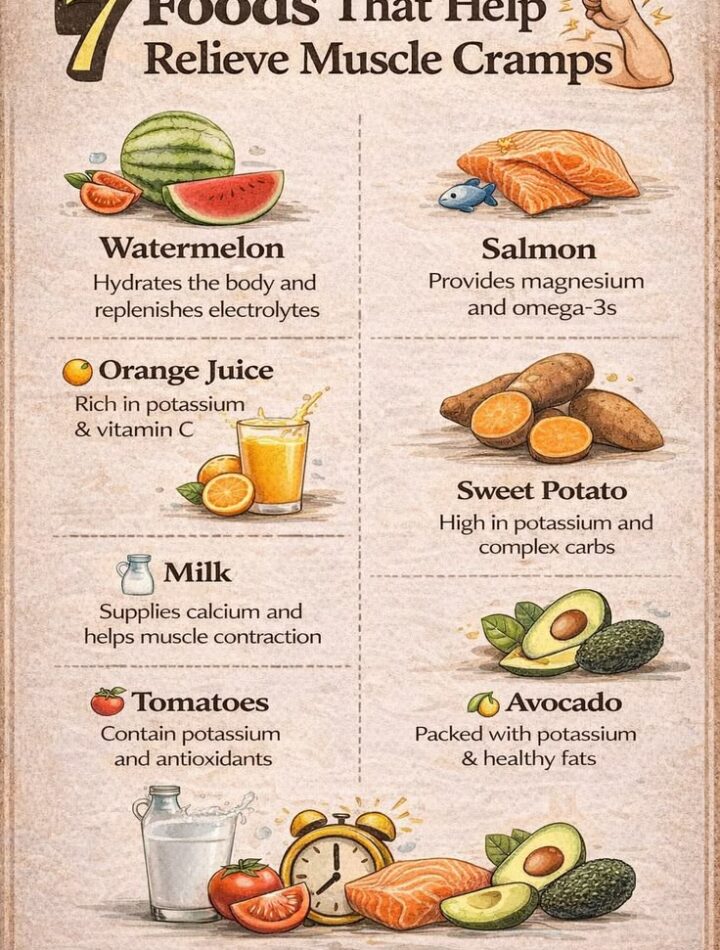
Muscle cramps can happen suddenly, causing painful, involuntary tightening in the legs, feet, or other muscles. Dehydration, heavy exercise, sweating, and low intake of certain nutrients may contribute to cramps. While no single food can guarantee immediate relief, a balanced diet that provides fluids, electrolytes, and essential minerals may help support normal muscle function.
Here are 7 foods that can be useful additions to a cramp-friendly diet, along with an easy recipe that combines several of them.
1. Bananas
Bananas are well known for their potassium content. Potassium is an electrolyte involved in nerve signaling and muscle contraction. A banana also provides carbohydrates that can help replenish energy after exercise.
Enjoy a banana as a snack, slice it over oatmeal, or blend it into a smoothie.
2. Greek Yogurt
Greek yogurt provides calcium, potassium, protein, and fluids. Calcium plays an important role in muscle contraction, while protein helps support muscle recovery after physical activity.
Choose plain Greek yogurt and add berries, banana, or a small handful of nuts for a nutritious snack.
3. Sweet Potatoes
Sweet potatoes provide potassium and carbohydrates, making them a good option after exercise or physical activity. They also contain several vitamins and minerals that contribute to an overall balanced diet.
Bake a sweet potato until tender, then top it with plain Greek yogurt and a sprinkle of herbs.
4. Avocados
Avocados contain potassium and magnesium, two minerals involved in normal muscle and nerve function. They also provide healthy fats and fiber.
Add sliced avocado to whole-grain toast, salads, sandwiches, or bowls.
5. Spinach
Spinach provides magnesium, potassium, calcium, and other nutrients. Magnesium is important for normal muscle and nerve function, although muscle cramps can have many causes and aren’t necessarily caused by magnesium deficiency.
Fresh spinach works well in salads, omelets, soups, and smoothies.
6. Watermelon
Watermelon has a high water content, making it a refreshing choice for hydration. It also supplies potassium and carbohydrates.
After exercise or on a hot day, watermelon can be a simple addition to your meals alongside plenty of water.
7. Pumpkin Seeds
Pumpkin seeds are a convenient source of magnesium, along with protein and healthy fats. A small handful makes an easy snack between meals.
Sprinkle them over yogurt, oatmeal, salads, or roasted vegetables.
Muscle-Cramps-Friendly Banana & Yogurt Bowl
This simple recipe combines banana, Greek yogurt, pumpkin seeds, and spinach in an optional smoothie variation. It makes a filling breakfast or snack and provides several nutrients important for normal muscle function.
Ingredients
- 1 ripe banana
- 1 cup plain Greek yogurt
- 1 tablespoon pumpkin seeds
- ½ cup fresh berries
- 1 tablespoon chopped walnuts, optional
- 1 teaspoon chia seeds, optional
- ½ cup fresh spinach, optional
- ¼ cup watermelon, diced
- 1 teaspoon honey, optional
- Pinch of cinnamon
Instructions
- Add the Greek yogurt to a medium serving bowl.
- Slice the banana and arrange it over the yogurt.
- Add the berries and diced watermelon.
- Sprinkle pumpkin seeds and chia seeds over the top.
- Add chopped walnuts if desired.
- Finish with a light sprinkle of cinnamon.
- Add a small amount of honey if you prefer extra sweetness.
- Serve immediately.
Smoothie Variation
For a drinkable version, combine the banana, Greek yogurt, spinach, watermelon, and a small amount of water in a blender. Blend until smooth. Add ice if desired and sprinkle pumpkin seeds on top after pouring.
Tips for Preventing Muscle Cramps
Food is only one part of supporting healthy muscle function. Staying adequately hydrated is particularly important when exercising, working outdoors, or sweating heavily. Drink fluids regularly rather than waiting until you are extremely thirsty.
If you exercise for a long period or sweat heavily, replacing electrolytes may also be useful. Meals containing fruits, vegetables, dairy products, nuts, seeds, and whole grains can naturally provide many electrolytes and minerals.
It is also helpful to warm up before strenuous exercise and gradually increase the intensity of your workouts. Gentle stretching after activity may be comfortable for some people.
Remember that muscle cramps can have many possible causes, including strenuous activity, prolonged muscle use, dehydration, certain medications, and medical conditions. Eating potassium- or magnesium-rich foods does not necessarily fix every type of cramp.
Final Thoughts
Adding nutrient-rich foods such as bananas, Greek yogurt, sweet potatoes, avocados, spinach, watermelon, and pumpkin seeds can help create a balanced eating pattern that supports normal muscle and nerve function. Pair these foods with adequate hydration and sensible exercise habits for a well-rounded approach to muscle health.
If cramps are frequent, severe, unusually painful, last a long time, or occur without an obvious reason, it is worth discussing them with a healthcare professional rather than relying only on dietary changes.