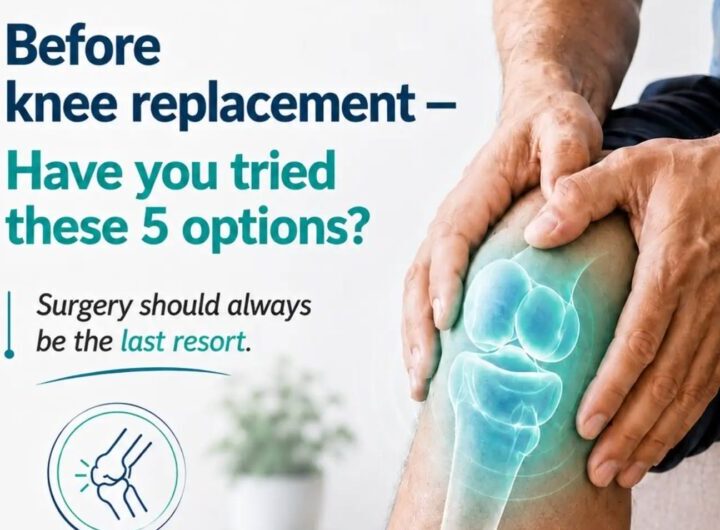
Severe knee pain can make everyday activities such as walking, climbing stairs, standing, or getting out of a chair difficult. Although knee surgery can be helpful for certain conditions, many people may benefit from nonsurgical treatments first. The right approach depends on the underlying cause, severity, age, activity level, and overall health.
Here are five commonly used nonsurgical approaches that may help manage severe knee pain.
1. Physical Therapy and Strengthening Exercises
Physical therapy is one of the most important nonsurgical treatments for many types of knee pain. A physical therapist can evaluate movement, muscle strength, flexibility, balance, and joint function before creating an individualized exercise program.
Strengthening the muscles around the knee can improve joint stability and reduce stress on the knee. Exercises may focus on the quadriceps, hamstrings, hips, and gluteal muscles.
Common exercises include:
- Straight-leg raises
- Seated leg extensions
- Hamstring curls
- Glute bridges
- Step-ups
- Gentle stationary cycling
Exercises should be introduced gradually. Performing too much too quickly can increase pain and swelling. A physical therapist can also teach proper movement techniques and recommend modifications for daily activities.
Low-impact activities such as swimming, water exercise, walking on comfortable surfaces, and cycling may be easier on painful knees than running or jumping.
2. Weight Management and Activity Modification
If someone is overweight, even modest weight loss may reduce the mechanical load placed on the knees. The knee experiences substantial forces during everyday activities, particularly when walking up stairs or rising from a chair.
A balanced eating pattern can support healthy weight management. Meals can emphasize vegetables, fruits, whole grains, beans, lean proteins, fish, nuts, and other nutrient-rich foods.
Activity modification is equally important. This does not necessarily mean complete rest. Instead, it means temporarily reducing activities that consistently worsen symptoms while maintaining appropriate movement.
For example, someone experiencing pain from high-impact exercise might replace running with swimming, cycling, or another lower-impact activity.
3. Heat, Cold, and Other Supportive Measures
Simple measures such as cold or heat can sometimes provide temporary relief.
Cold packs may be particularly useful after activity when the knee feels swollen or irritated. A cold pack should be wrapped in a cloth rather than placed directly against the skin.
Heat may help some people who experience stiffness, particularly before gentle movement or exercise. A warm shower or heating pad can make the joint feel more comfortable.
Other supportive measures may include elevation when swelling is present and temporary use of a brace or walking aid when recommended by a healthcare professional.
These approaches generally manage symptoms rather than correcting the underlying cause, so persistent or severe pain still deserves professional evaluation.
4. Medications and Injections
Depending on the cause of knee pain, healthcare professionals may recommend medication. Common options can include topical or oral pain relievers, but not every medication is appropriate for everyone.
Topical nonsteroidal anti-inflammatory drugs (NSAIDs), for example, may be useful for some people with osteoarthritis-related knee pain. Oral NSAIDs can also reduce pain and inflammation, but they can have important risks, particularly for people with certain stomach, kidney, heart, or blood-pressure problems.
Corticosteroid injections are another treatment sometimes used for painful arthritic joints. They may provide temporary relief for selected patients. Other injections, such as hyaluronic acid, are used in some settings, although their effectiveness varies and recommendations differ among medical organizations.
Because injections and medications have potential risks and limitations, they should be discussed with a qualified healthcare professional rather than used without guidance.
5. Physical Aids and Lifestyle Changes
Sometimes small changes in daily routines can significantly reduce stress on a painful knee.
Supportive footwear may improve comfort during walking. A healthcare professional can also determine whether a knee brace, cane, orthotic, or other assistive device could be appropriate.
Avoiding prolonged positions that aggravate symptoms may help. If stairs are particularly painful, using a handrail and taking them slowly can improve stability.
Good sleep, appropriate physical activity, and balanced nutrition are also important components of long-term pain management. While these lifestyle measures cannot eliminate every cause of knee pain, they can complement medical treatment and physical therapy.
When to Seek Medical Attention
Severe knee pain should not automatically be treated at home. A medical evaluation is especially important when pain is sudden, severe, or associated with an injury.
Seek prompt medical care if the knee becomes very swollen, red, hot, deformed, or impossible to bear weight on. Fever accompanying a hot, swollen knee can also require urgent assessment because infection is a potential emergency.
Persistent pain, locking, repeated instability, or significant loss of movement should also be evaluated to determine the underlying problem.
Final Thoughts
Knee surgery is not the only option for managing significant knee pain. Depending on the cause, physical therapy, strengthening exercises, weight management, activity modification, heat or cold therapy, medications, injections, and supportive devices may provide meaningful relief.
The most effective treatment is highly individual. A doctor or physical therapist can help identify whether the pain is related to osteoarthritis, an injury, tendon or ligament problems, bursitis, or another condition and then recommend an appropriate treatment plan.
Nonsurgical treatment does not mean ignoring severe symptoms. Instead, it means using evidence-based approaches to improve comfort, mobility, and function while determining whether additional treatment is necessary.