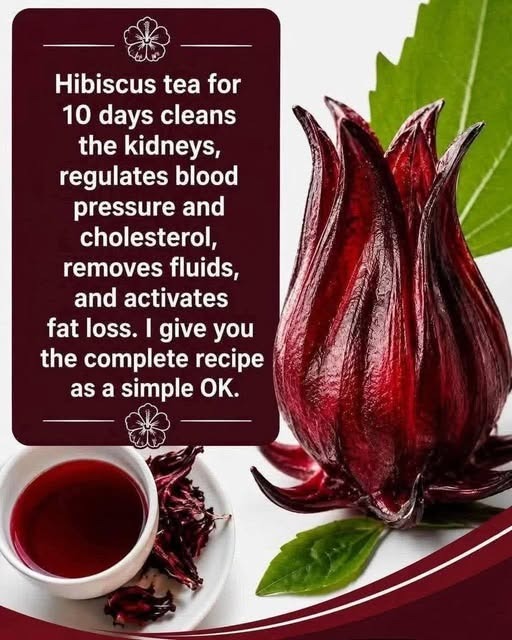

Hibiscus tea, also known as roselle tea or karkade, is a refreshing herbal drink made from the dried red calyces of the hibiscus flower. It has a beautiful ruby-red colour, a naturally tangy flavour, and is enjoyed both hot and cold.
This simple homemade recipe can be enjoyed as part of a balanced lifestyle. Hibiscus contains natural plant compounds, including anthocyanins and other antioxidants.
A note about the claims in the picture: Hibiscus tea is not a proven kidney cleanser, does not remove toxins or excess body fat, and should not be used as a replacement for blood pressure or cholesterol medication. Some research suggests it may modestly support healthy blood pressure, but results vary. Drinking it for 10 days cannot guarantee these health benefits.
1. Ingredients for Homemade Hibiscus Tea

You will need:
- 2 tablespoons dried hibiscus flowers (roselle).
- 4 cups clean drinking water.
- 1 small piece of fresh ginger (optional).
- 1 small cinnamon stick (optional).
- 1 teaspoon honey (optional).
- 1 teaspoon fresh lemon juice (optional).
- A few fresh mint leaves (optional).
Important: Use food-grade dried hibiscus flowers, preferably labelled Hibiscus sabdariffa. Do not use ornamental hibiscus flowers from the garden, as they may not be suitable for consumption.
2. Step-by-Step Preparation
- Wash your hands and inspect the dried hibiscus flowers to remove any unwanted particles.
- Pour 4 cups of water into a stainless-steel saucepan.
- Add the dried hibiscus flowers.
- Add the ginger and cinnamon stick if you want extra flavour.
- Bring the water to a gentle boil.
- Reduce the heat and simmer for approximately 5 minutes.
- Turn off the heat and cover the saucepan.
- Allow the flowers to steep for another 5–10 minutes.
- Strain the tea through a fine sieve.
- Add lemon juice and a little honey if desired.

Your homemade hibiscus tea is ready!
The drink should have a deep red colour and a pleasantly sour, fruity taste.
3. How to Drink Hibiscus Tea
You can enjoy hibiscus tea in two ways.
Hot hibiscus tea
- Pour the freshly prepared tea into a cup.
- Add lemon or a little honey if desired.
- Drink it warm, preferably without added sugar.
Cold hibiscus tea
- Allow the prepared tea to cool.
- Refrigerate it in a covered container.
- Serve with ice cubes, lemon slices and fresh mint.

For a refreshing everyday drink, you can enjoy a moderate serving rather than treating it as a medicine or undertaking a strict 10-day cleanse.
4. Possible Health Benefits of Hibiscus Tea
Hibiscus contains several naturally occurring plant compounds that have attracted scientific interest.
1. Antioxidant content
Hibiscus contains anthocyanins and polyphenols. These compounds have antioxidant activity and contribute to the flower’s distinctive red colour.
2. Blood pressure support
Some human studies suggest hibiscus tea may modestly reduce systolic blood pressure. However, the research is not conclusive, and the tea is not a substitute for prescribed medication.
PubMed
+2
3. Heart health
A balanced diet, regular physical activity, adequate sleep and appropriate medical care are important for cardiovascular health. Hibiscus tea can be one unsweetened beverage within that lifestyle.
4. Hydration
Hibiscus tea contributes to daily fluid intake. Drinking enough fluids supports normal bodily functions, including normal kidney function.
5. A replacement for sugary drinks
Unsweetened hibiscus tea can be a pleasant alternative to soft drinks and other sugar-sweetened beverages.
5. Does Hibiscus Tea Clean the Kidneys?
This is an important question because the picture claims that drinking hibiscus tea for 10 days cleans the kidneys.
Your kidneys naturally filter waste products and excess water from your blood. There is no reliable clinical evidence that a 10-day hibiscus tea treatment cleans or detoxifies the kidneys.
Hibiscus tea should not be used to treat:
- Kidney stones.
- Kidney infections.
- Chronic kidney disease.
- Kidney failure.
- Fluid retention caused by heart or kidney disease.
If you have kidney disease or have been advised to restrict fluids or potassium, ask your healthcare professional before drinking herbal teas regularly.
6. Can Hibiscus Tea Help With Weight Loss?
Hibiscus tea is sometimes promoted as a natural fat-burning drink, but there is not enough reliable human evidence to show that drinking it directly burns body fat.
However, unsweetened hibiscus tea may help support healthy habits because:
- It contains very few calories when prepared without sugar or honey.
- It can replace high-calorie sugary beverages.
- It adds variety to a healthy hydration routine.
- It can be enjoyed without adding unnecessary sweeteners.
For healthy weight management, combine it with balanced meals, vegetables, fruits, protein-rich foods, portion control and regular exercise.
Remember that no herbal tea can replace a healthy eating pattern.
7. Does Hibiscus Tea Lower Cholesterol?
Some research has investigated the possible effects of hibiscus on cholesterol levels. A 2022 systematic review found a modest reduction in LDL cholesterol in some studies, but the results varied and more research is needed.
Hibiscus tea should not be considered a treatment for high cholesterol. If your cholesterol is elevated, follow your doctor’s advice and have your cholesterol levels checked when recommended.
PubMed
+1
8. Important Precautions Before Drinking
Although hibiscus tea is a popular herbal beverage, it is not suitable for everyone.
Take these precautions:
- Low blood pressure: Hibiscus may lower blood pressure further in some people.
- Blood pressure medication: Consult your doctor before drinking it regularly because its effects may add to those of your medication.
- Pregnancy and breastfeeding: Avoid medicinal or regular concentrated use unless your healthcare professional confirms it is appropriate. Safety has not been adequately established.
- Diabetes medication: Ask your healthcare professional before using hibiscus regularly because of possible effects on blood sugar.
- Kidney or heart conditions: Seek medical advice, especially if you have fluid restrictions.
- Allergies: Stop drinking it if you experience an allergic reaction or other concerning symptoms.
Never stop prescribed medicines to replace them with hibiscus tea.
9. A Simple 10-Day Healthy Drinking Routine
If you simply want to include hibiscus tea in your daily routine, you can follow this gentle approach.
| Days | Suggested routine |
|---|---|
| 1–2 | Try a small cup and observe how you feel. |
| 3–4 | Enjoy a cup if you tolerate it well. |
| 5–6 | Continue moderate consumption if appropriate. |
| 7–8 | Combine it with healthy meals and sufficient hydration. |
| 9–10 | Continue your balanced lifestyle routine. |
This is a beverage routine, not a medically proven 10-day treatment. There is no requirement to drink hibiscus tea every day, and you should stop if you experience dizziness, stomach discomfort or other unwanted symptoms.
10. Final Tips for Making the Best Hibiscus Tea


For the best flavour:
- Choose clean, good-quality dried roselle flowers.
- Avoid boiling the flowers for too long, as the flavour can become excessively strong.
- Add ginger for a warming flavour.
- Add lemon for extra freshness.
- Avoid adding excessive sugar.
- Store leftover tea in a covered container in the refrigerator and use it within 2–3 days.
- Prepare fresh tea whenever possible.