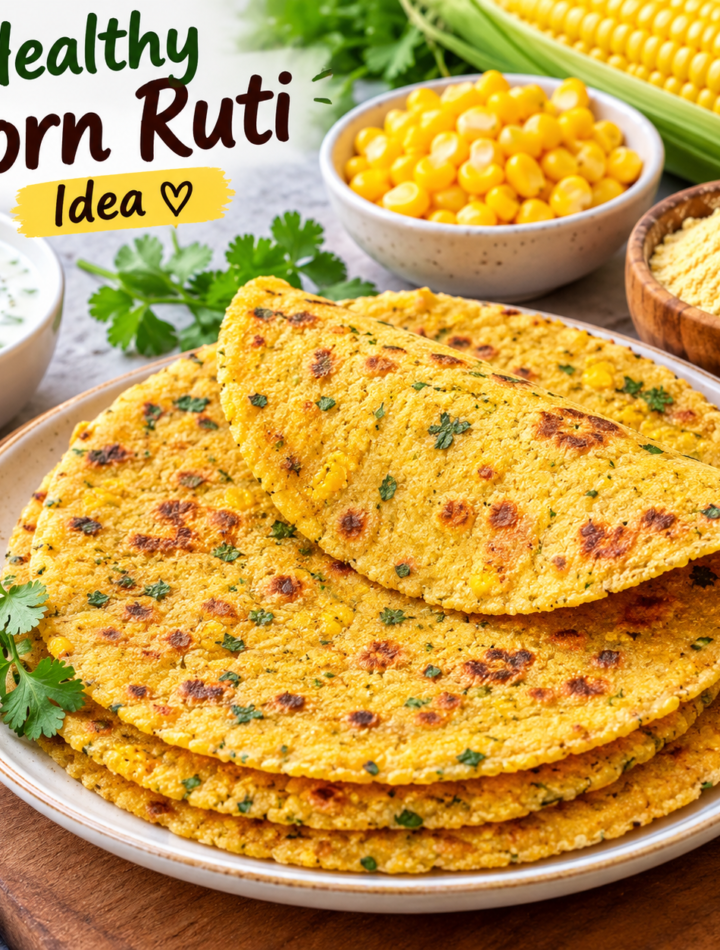
Healthy Corn Ruti Recipe
Healthy Corn Ruti is a delicious, naturally golden flatbread made with cornmeal, fresh corn, herbs, and simple pantry ingredients. It is a comforting alternative to traditional wheat-based flatbreads and makes a wonderful breakfast, lunch, or light dinner. The corn gives the ruti a naturally sweet flavor, while fresh coriander and mild spices add freshness and warmth.
These rotis are especially enjoyable when served hot with yogurt, vegetables, lentils, curry, or a simple homemade chutney. They are easy to customize, and you can make them thicker and soft or thinner with lightly crisp edges.
Ingredients
- 2 cups finely ground cornmeal or maize flour
- ½ cup fresh corn kernels, finely chopped or lightly mashed
- ½ teaspoon salt, or to taste
- ½ teaspoon cumin seeds
- ¼ teaspoon black pepper
- ½ teaspoon red chili flakes, optional
- 2 tablespoons finely chopped fresh coriander
- 1 small green chili, finely chopped, optional
- ½ teaspoon grated ginger
- 1 tablespoon plain yogurt
- 1 teaspoon olive oil or another cooking oil
- Approximately 1 to 1¼ cups hot water
- Extra oil or ghee for cooking, optional
Step 1: Prepare the Corn
If you are using fresh corn, remove the kernels from the cob and chop them finely. You can also pulse the kernels briefly in a food processor. The goal is to break them down slightly without turning them completely into a smooth paste.
If fresh corn is unavailable, frozen corn can be used. Thaw it completely, drain away excess moisture, and chop it finely.
Using corn kernels adds texture, natural sweetness, and moisture to the ruti.
Step 2: Make the Dough
Place the cornmeal in a large mixing bowl. Add salt, cumin seeds, black pepper, and chili flakes if using. Stir well.
Add the chopped corn, coriander, green chili, and grated ginger. Mix everything together so the ingredients are evenly distributed.
Add the yogurt and one teaspoon of oil. Yogurt helps give the ruti a softer texture, while a small amount of oil keeps the dough from becoming too dry.
Slowly pour in hot water while mixing with a spoon. Cornmeal absorbs water differently depending on how finely it is ground, so avoid adding all the water at once.
Once the mixture is cool enough to handle, begin kneading it gently with your hands. Add more hot water, one tablespoon at a time, until you have a soft, moist dough.
The dough should hold together when pressed. It should not be crumbly, but it also should not be wet or sticky.
Cover the bowl and allow the dough to rest for about 10 minutes.
Step 3: Shape the Rotis
Corn dough does not contain gluten, so it behaves differently from ordinary wheat dough. Instead of rolling it aggressively with a rolling pin, gently shape each ruti by hand.
Divide the dough into 6–8 equal portions.
Take one portion and roll it gently between your palms to form a ball. Place it between two sheets of parchment paper or food-safe plastic.
Press the dough with your fingers, gradually flattening it into a round shape. Aim for a thickness of approximately ⅛ to ¼ inch, depending on your preference.
If cracks appear around the edges, lightly wet your fingers and smooth them out.
For a softer ruti, keep it slightly thicker. For crispier edges, make it thinner.
Repeat with the remaining dough.
Step 4: Cook the Corn Ruti
Heat a flat skillet, tawa, or nonstick pan over medium heat.
Carefully transfer one shaped ruti to the hot pan. Cook for approximately 2–3 minutes, or until the bottom begins to firm up and small golden-brown spots appear.
Flip it carefully using a wide spatula.
Cook the second side for another 2–3 minutes. Press the edges gently with the spatula to encourage even cooking.
If desired, brush the surface lightly with a few drops of oil or ghee.
Flip once more and cook for another 30–60 seconds until the ruti is cooked through and has attractive toasted spots.
Avoid using very high heat. Cornmeal can brown quickly on the outside while remaining undercooked inside.
Continue cooking until all the rotis are finished.
Step 5: Keep Them Soft
Place cooked rotis in a clean kitchen towel or covered container as you work. Keeping them covered allows gentle steam to remain inside and helps prevent them from becoming dry.
If your rotis seem slightly firm, sprinkle a few drops of water over the dough before shaping the next batch or cook them over slightly lower heat.
Freshly cooked Corn Ruti is best served warm.
Serving Ideas
There are many delicious ways to enjoy Healthy Corn Ruti.
For breakfast, serve it with plain yogurt, cucumber, tomatoes, and a little homemade chutney. A boiled or scrambled egg on the side can turn it into a satisfying meal.
For lunch or dinner, pair the ruti with lentils, chickpea curry, mixed vegetables, grilled chicken, beans, or a vegetable stew.
You can also serve it with a simple yogurt dip. Combine plain yogurt with chopped coriander, grated cucumber, a pinch of cumin, salt, and a squeeze of lemon juice.
For a lighter option, serve the ruti with a fresh salad made from cucumber, tomatoes, onion, coriander, and lemon juice.
Healthy Variations
This recipe is easy to adapt.
For extra vegetables, add finely grated carrot, zucchini, or spinach. If adding zucchini, squeeze out excess water before mixing it into the dough.
For more protein, serve the ruti with Greek yogurt, cottage cheese, eggs, beans, lentils, or another protein-rich accompaniment.
For additional flavor, add a pinch of turmeric, coriander powder, or roasted cumin powder.
You can also add finely chopped onions, but make sure they are chopped very small so they do not make the dough difficult to shape.
For a mildly sweet version, omit the chilies and spices and add a small amount of grated carrot or a few finely chopped herbs. Serve it with yogurt or a light fruit-based accompaniment.
Tips for Perfect Corn Ruti
Use finely ground cornmeal: Fine maize flour produces a smoother and easier-to-shape ruti. Coarse cornmeal can make the flatbread more fragile.
Use hot water: Hot water helps soften the cornmeal and makes the dough easier to work with.
Do not make the dough too dry: A dry dough will crack when flattened and produce a hard ruti.
Rest the dough: Even a short 10-minute rest gives the cornmeal time to absorb moisture.
Shape gently: Corn dough has little elasticity, so pressing it gradually is much easier than rolling it forcefully.
Cook over medium heat: Moderate heat allows the center to cook while the outside develops beautiful toasted spots.
Keep cooked rotis covered: This helps retain their softness and warmth.
Storage and Reheating
Corn Ruti tastes best immediately after cooking, but leftovers can be stored.
Allow the rotis to cool completely, then place them in an airtight container or sealed food bag. Refrigerate for up to 2–3 days.
To reheat, place a ruti on a warm skillet for about 30–60 seconds per side. You can sprinkle a few drops of water onto it before reheating and cover the pan briefly to help restore moisture.
For longer storage, cooked rotis can be frozen with parchment paper between them. Place the stack in a freezer-safe container or bag. Reheat directly on a warm skillet when needed.
Why You’ll Love This Recipe
Healthy Corn Ruti is simple, wholesome, and versatile. It uses familiar ingredients while providing a delicious way to enjoy corn in a traditional flatbread style. Fresh corn contributes natural sweetness and texture, while coriander, ginger, cumin, and chili create a flavorful combination.
The recipe is also easy to adapt according to what you have available. You can make it completely mild for children, increase the spices for a more flavorful version, or add vegetables for extra variety.
Most importantly, homemade Corn Ruti is warm, comforting, and satisfying. Serve it straight from the skillet with your favorite yogurt dip, curry, vegetables, or protein-rich side dish for a delicious homemade meal.
Quick Recipe Summary
Prep time: 20 minutes
Resting time: 10 minutes
Cooking time: 20–25 minutes
Servings: 6–8 rotis
To make it, combine finely ground cornmeal with fresh corn, seasonings, coriander, ginger, yogurt, and hot water. Form a soft dough, rest it briefly, shape the rotis gently, and cook them on a medium-hot skillet until golden and lightly toasted.
Serve warm and enjoy!