Healthy blood depends on a balanced diet that provides iron, folate, vitamin B12, vitamin C, protein, and other essential nutrients. Iron is especially important because the body uses it to make hemoglobin, the protein in red blood cells that helps transport oxygen throughout the body. Choosing a variety of nutrient-rich foods can help support normal red blood cell production and overall nutrition.
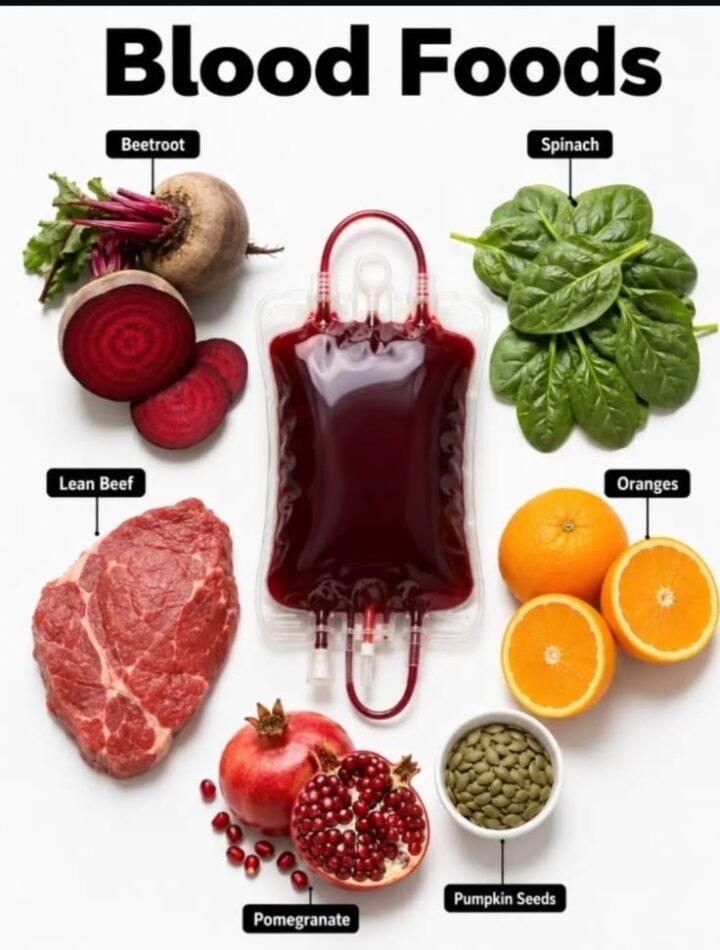
The image highlights several foods commonly associated with iron and blood-supportive nutrition, including beetroot, spinach, lean beef, oranges, pomegranate, and pumpkin seeds. Each offers different nutrients, making variety more valuable than relying on one “blood-building” food.
1. Lean Beef
Lean beef is one of the richest food sources of heme iron, a form of iron that the body generally absorbs more efficiently than the non-heme iron found in plant foods. Beef also provides high-quality protein and vitamin B12, which is important for normal red blood cell formation and nervous-system function.
Choose lean cuts and prepare them by grilling, roasting, broiling, or pan-searing rather than relying on heavily processed meat. A moderate serving paired with vegetables can make a nutrient-dense meal.
2. Spinach
Spinach is a versatile leafy green that provides non-heme iron, folate, vitamin C, vitamin K, and other plant nutrients. Although the iron in spinach is not absorbed as efficiently as heme iron, spinach can still contribute to overall iron intake.
One useful strategy is to combine spinach with foods rich in vitamin C. For example, sauté spinach and serve it alongside tomatoes, bell peppers, or a fresh orange. Vitamin C can improve the absorption of non-heme iron from plant foods.
3. Pumpkin Seeds
Pumpkin seeds are a convenient source of plant-based iron, magnesium, protein, zinc, and healthy fats. They make an easy addition to oatmeal, yogurt, salads, soups, or homemade trail mixes.
Because pumpkin seeds are calorie-dense, a small handful can provide plenty of nutrition without requiring a large serving. Choose unsalted or lightly salted varieties when possible.
4. Oranges
Oranges are not particularly high in iron, but they can be valuable in an iron-focused diet because they provide vitamin C. Vitamin C helps the body absorb non-heme iron from plant foods.
Try pairing an orange with an iron-containing breakfast or snack. Spinach, pumpkin seeds, beans, or fortified cereals can all benefit from being eaten alongside vitamin-C-rich foods.
5. Beetroot
Beetroot is often promoted as a “blood-building” food, but it is important to separate popular claims from nutrition science. Beets are not an exceptionally rich source of iron. However, they provide folate, fiber, potassium, and naturally occurring plant compounds that can contribute to a healthy diet.
Roasted beetroot works beautifully in salads, while cooked or grated beets can be added to grain bowls and vegetable dishes. Beet greens can also be cooked like other leafy vegetables.
6. Pomegranate
Pomegranate provides vitamin C, folate, fiber, and antioxidant-rich plant compounds. Although it is not a major source of iron, its seeds can add variety and valuable nutrients to meals.
Sprinkle pomegranate arils over spinach salads, oatmeal, yogurt, or grain bowls. Combining several nutritious ingredients in one meal is a practical way to improve overall dietary quality.
7. Other Excellent Iron-Rich Foods
Beyond the foods shown in the image, many other foods can contribute to adequate iron intake. Lentils, beans, chickpeas, tofu, fortified breakfast cereals, poultry, seafood, eggs, and certain nuts and seeds can all play a role.
For people following a vegetarian or vegan eating pattern, paying particular attention to iron-rich foods is useful because plant sources contain non-heme iron. Eating these foods regularly alongside vitamin-C-rich produce can help maximize absorption.
How to Improve Iron Absorption
What you eat with an iron-rich food can make a difference. Pair plant-based iron sources with vitamin-C-rich foods such as oranges, strawberries, kiwi, tomatoes, broccoli, or bell peppers.
It can also be helpful to avoid drinking tea or coffee immediately with an iron-rich meal because compounds called polyphenols can reduce non-heme iron absorption. Calcium may also interfere with iron absorption in certain circumstances, so people taking iron supplements should follow their healthcare professional’s instructions about timing.
A Simple Healthy Blood-Supporting Meal
For an easy balanced meal, try a spinach and lean-beef salad topped with pumpkin seeds and pomegranate seeds, served with orange slices on the side. This combination provides heme iron from beef, non-heme iron from spinach and pumpkin seeds, vitamin C from oranges, protein, folate, fiber, and a variety of plant nutrients.
For a plant-based alternative, replace the beef with lentils or chickpeas and keep the spinach, pumpkin seeds, pomegranate, and orange.