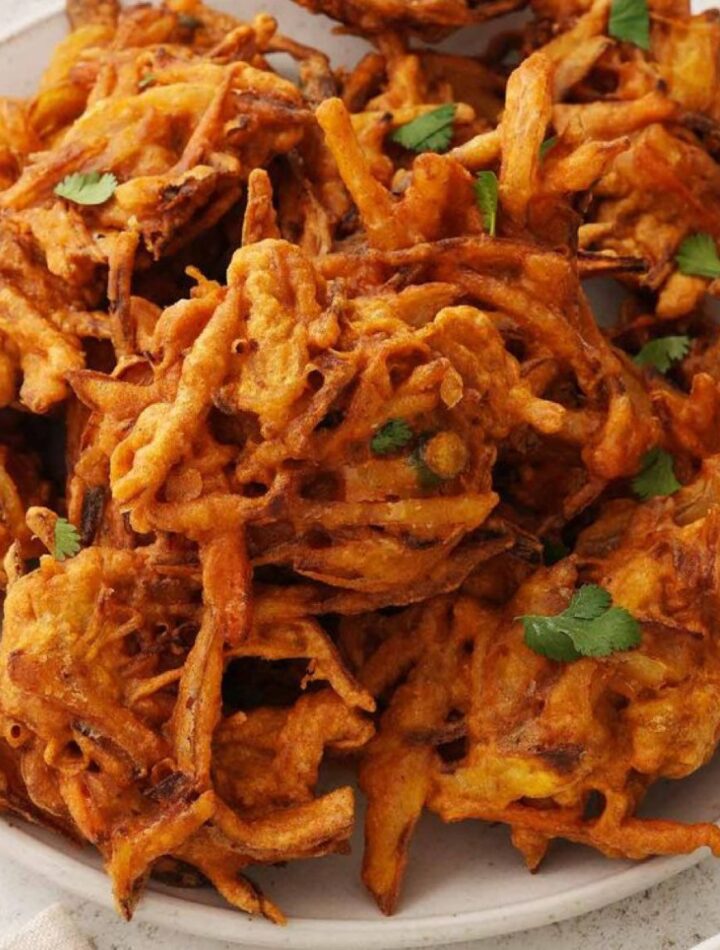
Onion Pakoda, also known as Onion Pakora or Kanda Bhaji, is a popular Indian snack made by coating thinly sliced onions with gram flour, spices, and herbs before deep-frying them until golden and crispy. This savory fritter is a favorite during the rainy season and is often served with hot tea, green chutney, or tomato ketchup. The combination of sweet onions, aromatic spices, and a crunchy texture makes Onion Pakoda a delicious appetizer or evening snack. With simple ingredients and an easy cooking process, this classic recipe is perfect for both beginners and experienced home cooks.
Ingredients
Main Ingredients
- 3 large onions, thinly sliced
- 2 cups gram flour (besan)
- 2 tablespoons rice flour (for extra crispiness)
- 2 green chilies, finely chopped
- 1 teaspoon ginger, grated
- 2 tablespoons fresh coriander leaves, chopped
- 8–10 curry leaves, chopped (optional)
- 1 teaspoon cumin seeds
- ½ teaspoon carom seeds (ajwain)
- 1 teaspoon red chili powder
- ½ teaspoon turmeric powder
- 1 teaspoon coriander powder
- ½ teaspoon garam masala (optional)
- Salt to taste
- 2–3 tablespoons water (if needed)
- Oil for deep frying
Instructions
Step 1: Slice the Onions
Peel the onions and slice them thinly. Place the sliced onions in a large mixing bowl. Sprinkle a little salt over the onions and gently mix them using your hands. Let them rest for about 10 minutes. This helps the onions release their natural moisture, making it easier to prepare the batter without adding much water.
Step 2: Add the Dry Ingredients
Add the gram flour, rice flour, cumin seeds, carom seeds, red chili powder, turmeric powder, coriander powder, and garam masala to the onions. Mix well until the onions are evenly coated with the flour and spices.
Step 3: Add Herbs and Chilies
Mix in the chopped green chilies, grated ginger, coriander leaves, and curry leaves. These ingredients add freshness and enhance the overall flavor of the pakodas.
Step 4: Prepare the Batter
Using your hands, combine everything thoroughly. The moisture released by the onions usually helps bind the mixture together. If the mixture seems too dry, sprinkle only a small amount of water, one tablespoon at a time. The batter should be thick and cling to the onion slices rather than becoming smooth or runny.
Step 5: Heat the Oil
Pour enough oil into a deep frying pan or kadai and heat it over medium heat. To check if the oil is ready, drop a tiny portion of batter into the oil. If it rises immediately and sizzles gently, the oil has reached the correct temperature.
Step 6: Fry the Pakodas
Carefully drop small portions of the onion mixture into the hot oil using your fingers or a spoon. Avoid overcrowding the pan, as this lowers the oil temperature and prevents even cooking.
Fry the pakodas for about 4–6 minutes, turning occasionally, until they become crisp and evenly golden brown. Remove them with a slotted spoon and place them on a plate lined with paper towels to absorb excess oil.
Continue frying the remaining batter in batches.
Step 7: Serve Hot
Serve the Onion Pakodas immediately while they are hot and crispy. Garnish with fresh coriander leaves if desired.
Serving Suggestions
Onion Pakoda pairs wonderfully with mint chutney, coriander chutney, tamarind chutney, or tomato ketchup. It also tastes delicious alongside a steaming cup of masala chai or ginger tea. For a complete snack platter, serve it with fried green chilies, lemon wedges, and sliced onions.
These crispy fritters can also be served as a party appetizer or as a side dish with Indian meals.
Tips for Perfect Onion Pakoda
- Slice the onions thinly for even cooking and maximum crispiness.
- Do not add too much water. A thick mixture creates crisp pakodas.
- Rice flour improves the crunchy texture.
- Fry over medium heat so the pakodas cook evenly without burning.
- Avoid overcrowding the pan while frying.
- Serve immediately after frying for the best flavor and texture.
- Use fresh gram flour for a better taste and aroma.
Variations
There are several ways to customize Onion Pakoda. Add finely chopped spinach, cabbage, or grated carrots for extra nutrition and flavor. You can also include crushed fennel seeds or black pepper for a unique taste.
For a spicier version, increase the amount of green chilies or add finely chopped fresh red chilies. If you enjoy herbs, fresh mint leaves can be mixed into the batter for an aromatic twist.
To make the pakodas even crispier, sprinkle a pinch of baking soda into the batter just before frying. However, use it sparingly, as too much can affect the flavor.
Storage and Reheating
Onion Pakoda is best enjoyed fresh. If you have leftovers, allow them to cool completely before storing them in an airtight container in the refrigerator for up to two days.
To restore their crispiness, reheat them in a preheated oven or air fryer at 180°C (350°F) for about 5–7 minutes. Avoid reheating in a microwave, as it can make the pakodas soft.
Nutritional Information
Onion Pakoda provides carbohydrates from gram flour and onions, along with a moderate amount of protein from besan. While deep frying increases the calorie content, enjoying pakodas in moderation as part of a balanced diet is perfectly acceptable. You can also air fry or bake them for a lighter alternative, although the texture will be slightly different.
Conclusion
Onion Pakoda is a timeless Indian snack loved for its irresistible crunch, bold spices, and comforting flavors. Made with everyday ingredients, it is quick to prepare and perfect for family gatherings, festive celebrations, or rainy-day evenings. Whether served with chutney, ketchup, or a hot cup of tea, these crispy onion fritters are sure to delight everyone at the table. Once you master this simple recipe, you can experiment with different vegetables, herbs, and spice combinations to create your own delicious variations. Freshly fried Onion Pakodas are always a crowd-pleaser and a wonderful addition to any snack menu.