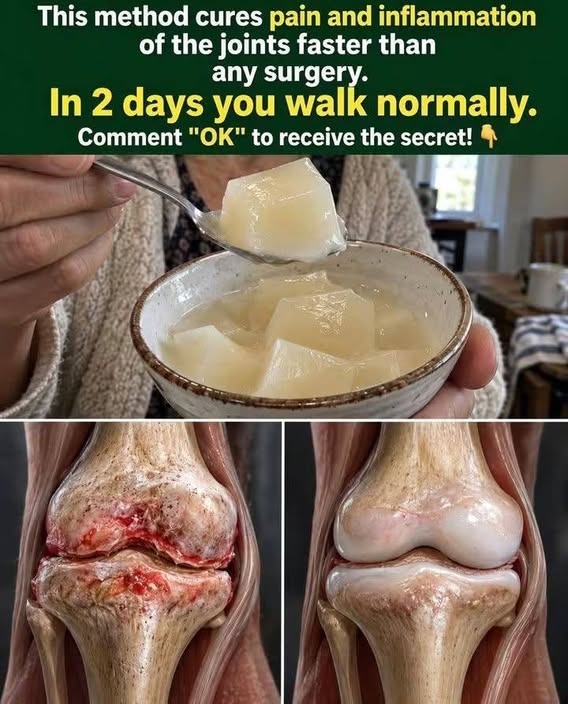
Gelled bone broth is a simple way to turn homemade bone broth into a soft, jiggly jelly. When broth is simmered from bones, connective tissue, and cartilage, collagen can break down into gelatin. Once the broth is chilled, that gelatin can make the liquid set into a firm or softly wobbly jelly.
Important: The image claims that this method can “cure” joint pain or inflammation in two days and replace surgery. Those claims are not established by this recipe. Bone broth can be a nutritious food, but it should not be considered a treatment for arthritis, joint damage, or other medical conditions.
Ingredients
1–1.5 kg beef, chicken, or mixed soup bones
2–3 chicken feet, optional, for extra natural gelatin
1 large onion, roughly chopped
2 carrots, chopped
2 celery stalks, chopped
3–4 garlic cloves, lightly crushed
1–2 tablespoons apple cider vinegar or lemon juice
2 bay leaves
1 teaspoon black peppercorns
1–2 teaspoons salt, or to taste
3–4 liters cold water, enough to cover the bones
Fresh parsley or coriander, optional
Optional gelatin
If your broth does not naturally become firm after chilling, you can add unflavored food-grade gelatin. About 10–15 g gelatin per liter of strained broth will produce a noticeably firmer jelly, depending on the brand and desired texture.
Arrange the bones on a baking tray and roast at approximately 220°C (425°F) for 30–40 minutes, turning once if necessary. They should become nicely browned but not burnt.
Chicken bones generally don’t need roasting, although roasting can still add extra flavor.
Transfer the roasted bones to a large stockpot.
Step 2: Add the Vegetables
Add the onion, carrots, celery, garlic, bay leaves, and peppercorns.
Pour in enough cold water to cover everything by several centimeters. Add the apple cider vinegar or lemon juice.
The mild acidity isn’t required to make the broth into jelly, but it is commonly used in bone-broth recipes and contributes a slightly brighter flavor.
Bring everything slowly to a gentle boil.
Once the broth begins boiling, reduce the heat to low.
You want a gentle simmer, not a vigorous boil.
During the first part of cooking, foam may rise to the surface. Skim it away with a spoon or fine-mesh skimmer.
Cover the pot partially and simmer:
Chicken bones: approximately 6–12 hours
Beef bones: approximately 12–24 hours
You can also use a slow cooker according to its manufacturer’s instructions.
The longer cooking time helps extract flavor and gelatin-forming components from bones and connective tissue.
Step 4: Strain the Broth
When you’re finished cooking, carefully remove the large bones and vegetables.
Pour the broth through a fine-mesh strainer into a large heatproof container.
For an especially clear broth, strain it a second time through a clean fine-mesh strainer.
Taste the broth and add salt if needed.
At this stage, it should be flavorful but may still look completely liquid. Don’t worry—that’s normal.
Step 5: Test for Gel
Before putting the entire batch into the refrigerator, you can perform a quick test.
Pour a small amount of broth into a cup and refrigerate it for several hours.
If it becomes soft and jiggly, your broth contains enough natural gelatin to set.
If it remains liquid, you can either reduce the broth further or add unflavored gelatin.
Adding gelatin
For a firmer jelly, sprinkle the gelatin over a small amount of cool water and allow it to hydrate for several minutes.
Warm some of the strained broth—not boiling—and stir the hydrated gelatin into it until completely dissolved.
Mix this back into the remaining broth.
Step 6: Make the Jelly
Pour the finished broth into:
Small glass containers
Silicone molds
A shallow baking dish
Small food-storage containers
Allow the broth to cool for a short time at room temperature, but don’t leave it out for an extended period.
Cover the containers and refrigerate.
The jelly should begin setting after several hours and will generally be firmer after overnight refrigeration.
Step 7: Remove the Fat
Once refrigerated, you may notice a solid layer of fat on top.
If you prefer a lighter jelly, simply lift the chilled fat layer away with a spoon.
Alternatively, you can leave some of it for additional flavor.
The chilled broth underneath should have a soft, wobbly texture.
How to Serve Bone Broth Jelly
You don’t have to eat it like a dessert. Because this is a savory jelly, it works particularly well as a concentrated broth ingredient.
- Warm it into soup
Place a portion in a saucepan and gently heat it until it melts. Add vegetables, noodles, rice, chicken, or other ingredients for a quick soup.
- Use it for sauces
Melt a small amount and use it as a flavorful base for gravies and sauces.
- Add it to rice
A spoonful of melted bone broth jelly can be added to rice while cooking to give it additional savory flavor.
- Serve it as a savory jelly
For a cold preparation, cut the firm jelly into small cubes and serve it alongside other savory foods.
Storage
Keep the finished jelly refrigerated in covered containers.
For longer storage, freeze it in small portions. Ice-cube trays or small freezer-safe containers are convenient because you can thaw only what you need.
Always use clean utensils and containers, and refrigerate cooked broth promptly rather than leaving it at room temperature for long periods.
Tips for Successful Gel
Use connective-tissue-rich ingredients. Chicken feet, joints, skin, cartilage, and certain beef bones can contribute more gelatin than very lean bones.
Don’t add too much water. Excess water can produce a broth that tastes weak and doesn’t set firmly.
Reduce the broth if necessary. If your strained broth is flavorful but too thin, simmer it uncovered to concentrate it before adding gelatin.
Don’t judge it while hot. Gelatin melts when warm, so a broth that looks completely liquid in the pot may become firm after refrigeration.
Don’t expect every batch to gel. The amount of gelatin extracted naturally varies according to the bones, connective tissue, water-to-bone ratio, and cooking process.