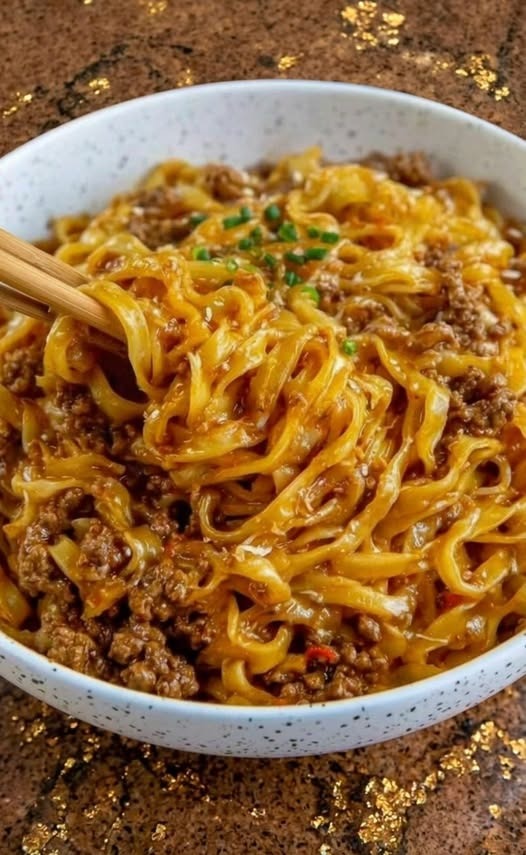
Savory Mongolian Beef Noodles are the perfect answer when you want a quick, hearty dinner packed with bold Asian-inspired flavor. Tender beef, chewy noodles, garlic, ginger, and green onions come together in a glossy sauce that is sweet, salty, savory, and slightly spicy. It is comforting enough for a family dinner while being easy enough to prepare on a busy weeknight.
The beauty of this recipe is its simplicity. Instead of ordering takeout, you can have a flavorful noodle dinner on the table in about 30 minutes. Ground beef makes preparation especially quick, although thinly sliced steak can also be used if you prefer a more traditional beef texture. Linguine, spaghetti, ramen, udon, or other sturdy noodles can work beautifully because they hold onto the rich sauce.
Ingredients
For the Beef and Noodles
- 1 pound ground beef
- 12 ounces linguine or spaghetti
- 1 tablespoon vegetable oil, if needed
- 4 cloves garlic, minced
- 1 tablespoon fresh ginger, grated or finely minced
- 2 green onions, thinly sliced
- 1 teaspoon sesame seeds, for garnish
- ¼ teaspoon red pepper flakes, optional
For the Mongolian Sauce
- ½ cup low-sodium soy sauce
- ½ cup beef broth or water
- ¼ cup packed brown sugar
- 3 tablespoons hoisin sauce
- 1 teaspoon toasted sesame oil
- ½ teaspoon freshly ground black pepper
- 1 tablespoon cornstarch
- 2 tablespoons cold water
Preparing the Noodles
Bring a large pot of salted water to a boil. Add the noodles and cook according to the package directions until just al dente. Avoid overcooking because the noodles will continue cooking briefly when they are tossed with the hot beef and sauce.
Before draining, reserve about 1 cup of the cooking water. Drain the noodles and set them aside. Do not rinse them, as the natural starch on the surface helps the sauce cling to the noodles.
Make the Sauce
While the noodles are cooking, prepare the sauce. In a medium bowl, whisk together the soy sauce, beef broth, brown sugar, hoisin sauce, sesame oil, and black pepper.
In a separate small bowl, stir the cornstarch into the cold water until completely smooth. This simple slurry will help thicken the sauce without creating lumps.
Taste the sauce if desired and adjust it to your preference. If you like a sweeter dish, add another teaspoon or two of brown sugar. For more heat, increase the red pepper flakes or add a little chili sauce.
Brown the Beef
Heat a large skillet or wok over medium-high heat. Add the ground beef and cook for approximately 5–7 minutes, breaking it apart with a wooden spoon or spatula as it cooks.
Continue cooking until the beef is thoroughly browned and no pink remains. If there is a large amount of excess fat in the pan, carefully drain some of it. Leave a small amount behind for flavor.
Reduce the heat slightly and add the minced garlic and fresh ginger. Cook for about 30–60 seconds, stirring constantly. The garlic and ginger should become fragrant but should not burn.
Add the Mongolian Sauce
Pour the prepared soy sauce mixture into the skillet with the beef. Stir well, scraping the bottom of the skillet to loosen any browned pieces.
Bring the mixture to a gentle simmer. Stir in the cornstarch slurry and continue cooking for 2–3 minutes. The sauce should gradually become glossy and thick enough to coat the back of a spoon.
If the sauce becomes too thick, add a splash of the reserved noodle water. If it seems too thin, allow it to simmer for another minute or two.
Combine Everything
Add the cooked noodles directly to the skillet. Using tongs, gently toss the noodles with the beef and sauce until everything is thoroughly coated.
Cook for another 1–2 minutes, allowing the noodles to absorb some of the sauce. If needed, add reserved noodle water a tablespoon at a time until you reach your preferred consistency.
The finished noodles should be glossy and saucy rather than watery. Every strand should be coated with the savory Mongolian-style sauce, while the beef should be distributed throughout.
Garnish and Serve
Remove the skillet from the heat. Sprinkle generously with sliced green onions and sesame seeds. For extra heat, add a pinch of red pepper flakes or a drizzle of chili oil.
Serve the noodles immediately while they are hot.
Helpful Tips
Don’t overcook the noodles: Slightly firm noodles work best because they finish cooking in the sauce.
Use fresh aromatics: Fresh garlic and ginger give the dish much more fragrance and depth than dried versions.
Control the sweetness: Mongolian-style sauce traditionally has a noticeable sweet-savory character. Start with the recommended amount of brown sugar and adjust according to your taste.
Don’t rush the sauce: Allowing it to simmer briefly after the cornstarch slurry is added gives it a smooth, glossy consistency.
Use reserved noodle water: A small splash can loosen the sauce while also helping it cling to the noodles.
Easy Variations
For a more traditional steak-style version, replace the ground beef with about 1 pound of thinly sliced flank steak or sirloin. Toss the beef lightly with cornstarch before stir-frying for a deliciously crisp exterior.
For extra vegetables, add sliced bell peppers, broccoli, shredded carrots, snow peas, mushrooms, or thinly sliced onions. Stir-fry the vegetables before adding the sauce, then return the beef to the skillet.
For a spicy version, add chili flakes, chili crisp, sriracha, or sliced fresh chilies. You can also finish the dish with a drizzle of chili oil.
For a gluten-free meal, use gluten-free noodles and replace regular soy sauce and hoisin sauce with certified gluten-free alternatives such as tamari and an appropriate gluten-free hoisin sauce.
Storage and Reheating
Store leftover Mongolian Beef Noodles in an airtight container in the refrigerator for up to 3 days. The noodles may absorb some of the sauce as they sit, so add a tablespoon or two of water or broth when reheating.
Reheat gently in a skillet over medium-low heat, stirring occasionally. You can also microwave individual portions, adding a small splash of water before heating.
Serving Suggestions
These noodles are satisfying enough to serve as a complete meal, but they pair wonderfully with simple sides. Try steamed broccoli, stir-fried vegetables, cucumber salad, spring rolls, or steamed dumplings.
For a fresh contrast to the rich sauce, serve the noodles with sliced cucumbers, shredded carrots, or a simple green salad.