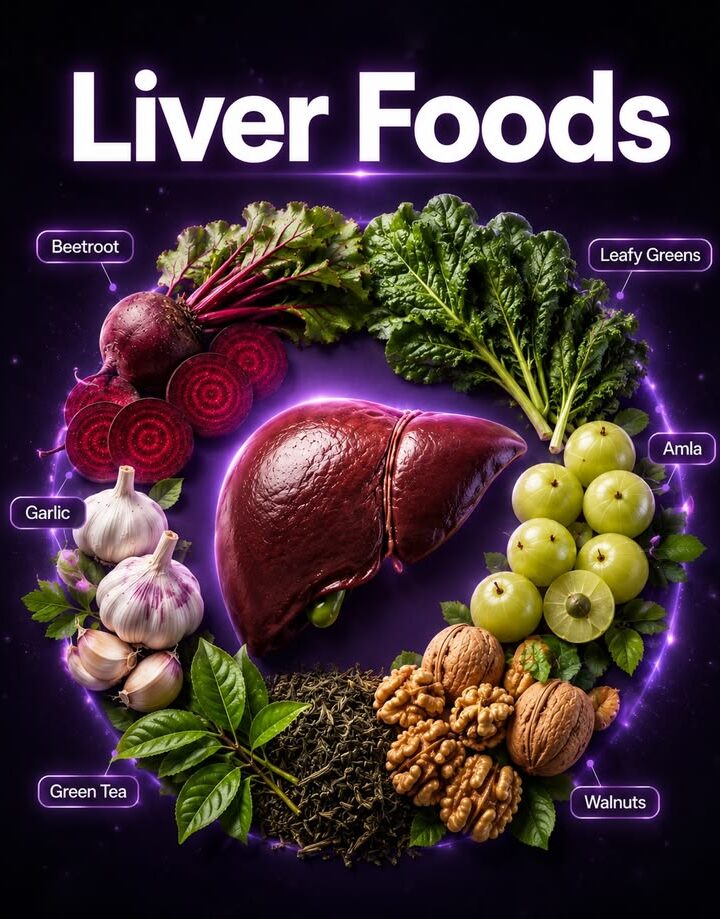
Supporting liver health starts with an overall balanced eating pattern rich in vegetables, fruits, whole grains, lean proteins, healthy fats, and plenty of water. No single food can “cleanse” or repair the liver, but nutritious meals can provide the vitamins, minerals, fiber, and antioxidants your body needs.
This simple Liver-Friendly Vegetable and Chicken Bowl combines several foods commonly included in a liver-supportive diet, including leafy greens, broccoli, berries, avocado, olive oil, and lean protein.
Ingredients
For the bowl
- 1 cup cooked brown rice or quinoa
- 1 cup broccoli florets
- 1 cup spinach or kale
- ½ cup blueberries or strawberries
- ½ avocado, sliced
- 120–150 g cooked skinless chicken breast
- 1 tablespoon pumpkin seeds or chia seeds
- 1 tablespoon extra-virgin olive oil
- 1 tablespoon fresh lemon juice
- 1 small garlic clove, finely minced
- ¼ teaspoon black pepper
- A small pinch of salt
- Fresh parsley, optional
Optional dressing
- 1 tablespoon plain Greek yogurt
- 1 teaspoon lemon juice
- ½ teaspoon olive oil
- A pinch of black pepper
Why These Foods Are a Good Choice
Leafy greens: Spinach and kale provide fiber, folate, vitamin K, and other plant compounds. Including a variety of vegetables is a simple way to increase overall nutrient intake.
Broccoli: Cruciferous vegetables such as broccoli are rich in fiber and beneficial plant compounds. They make an excellent addition to a balanced diet.
Berries: Blueberries and strawberries add natural sweetness along with fiber and antioxidant compounds. Fresh or frozen berries can work equally well.
Avocado: Avocado provides mostly unsaturated fats and fiber. Its creamy texture also makes a satisfying alternative to heavier sauces.
Olive oil: Extra-virgin olive oil is a source of monounsaturated fat and can be used in place of butter or other saturated-fat-rich ingredients.
Chicken: Skinless chicken provides protein without requiring a heavy, creamy sauce. You can also substitute beans, lentils, tofu, or fish.
Brown rice or quinoa: Whole grains provide carbohydrates and fiber that can make the meal more filling and balanced.
Seeds: Pumpkin seeds and chia seeds add fiber, healthy fats, and minerals.
Instructions
1. Prepare the grains
Cook brown rice or quinoa according to the package directions. Once cooked, fluff it with a fork and set aside.
2. Cook the chicken
If using raw chicken, season it lightly with black pepper and a small amount of salt. Cook in a skillet over medium heat until completely cooked through and no longer pink in the center. Let it rest for a few minutes before slicing.
For convenience, leftover roasted or grilled chicken can also be used.
3. Prepare the vegetables
Steam the broccoli until tender-crisp. Avoid overcooking it so that it retains its texture.
Add spinach or kale to the warm broccoli for the final minute of cooking, or use the greens fresh if preferred.
4. Make the dressing
Whisk together olive oil, lemon juice, minced garlic, and black pepper. For a creamier option, combine Greek yogurt with lemon juice, olive oil, and black pepper.
5. Assemble the bowl
Place the cooked brown rice or quinoa in a large bowl. Add broccoli, leafy greens, sliced chicken, berries, and avocado.
Drizzle with the lemon-olive-oil dressing and sprinkle with pumpkin seeds or chia seeds.
Garnish with fresh parsley if desired.
Other Foods to Include for Liver-Friendly Eating
You do not need to eat the same meal every day. Variety is one of the easiest ways to build a nutritious diet.
Fatty fish: Salmon, sardines, trout, and similar fish provide protein and omega-3 fatty acids.
Beans and lentils: These are excellent sources of plant protein and fiber and can replace some higher-fat meats.
Oats: Oatmeal provides soluble fiber and makes a convenient breakfast. Top it with berries and a small amount of nuts for a balanced meal.
Nuts: Almonds, walnuts, and other unsalted nuts can provide healthy fats and plant nutrients. Keep portions moderate because nuts are calorie-dense.
Whole fruits: Apples, oranges, pears, berries, and other fruits can provide fiber and naturally occurring nutrients.
Garlic and onions: These flavorful ingredients can help you create satisfying meals without relying heavily on salt, butter, or rich sauces.
Coffee: For many adults, unsweetened coffee can fit into a liver-conscious eating pattern. However, people with certain medical conditions or caffeine sensitivity should discuss appropriate intake with a healthcare professional.
Foods to Limit
A liver-friendly diet is not only about what you add; it is also about moderating foods that may contribute excess calories, added sugars, or unhealthy fats.
Try to limit sugary drinks, excessive sweets, highly processed snack foods, heavily fried foods, and frequent consumption of processed meats. Large amounts of alcohol can be particularly harmful to the liver, so avoiding alcohol is important for people with alcohol-related liver disease and may be recommended for other liver conditions.
Instead of sugary beverages, choose water, sparkling water without added sugar, or unsweetened tea.
Simple Meal Variations
You can easily change this recipe throughout the week.
For a vegetarian version, replace chicken with chickpeas, lentils, tofu, or beans.
For a fish bowl, use grilled salmon or trout instead of chicken.
For breakfast, make oatmeal with blueberries, chia seeds, walnuts, and plain yogurt.
For lunch, prepare a large salad with leafy greens, chickpeas, cucumber, tomatoes, avocado, and olive oil-lemon dressing.
For dinner, try baked fish with roasted vegetables and quinoa.
Storage Tips
Store cooked ingredients separately in airtight containers in the refrigerator and use them within a safe timeframe. Keep avocado and dressing separate when possible to preserve freshness. Add berries and seeds just before serving for better texture.