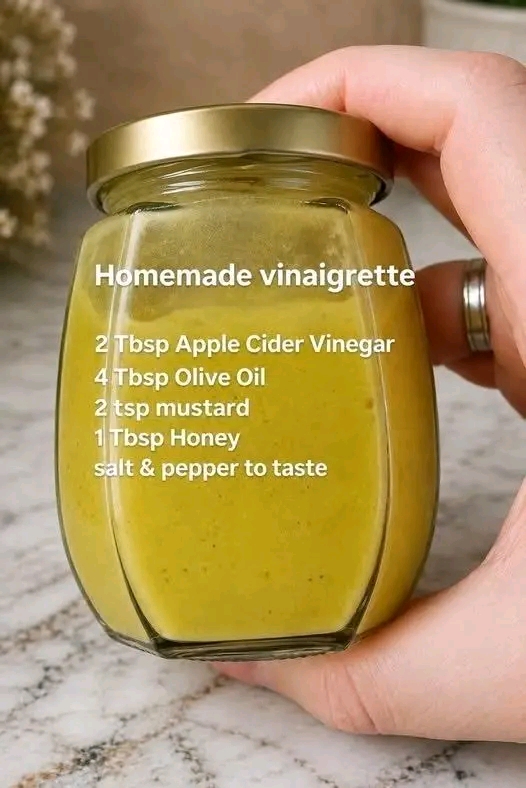
A homemade vinaigrette is one of the easiest ways to turn a simple salad into something fresh, flavorful, and satisfying. Unlike many bottled dressings, homemade vinaigrette lets you control the ingredients, sweetness, acidity, salt, and seasoning. It takes only a few minutes to prepare and can be customized to complement almost any salad, roasted vegetable, grain bowl, or grilled dish.
Ingredients
- ½ cup extra-virgin olive oil
- 3 tablespoons red wine vinegar
- 1 tablespoon fresh lemon juice
- 1 teaspoon Dijon mustard
- 1 small garlic clove, finely minced
- 1 teaspoon honey or maple syrup
- ½ teaspoon dried oregano
- ¼ teaspoon freshly ground black pepper
- ¼ teaspoon salt, or to taste
- 1 tablespoon finely chopped fresh parsley, optional
Instructions
Begin by gathering all of your ingredients. Using fresh lemon juice and good-quality olive oil will make a noticeable difference in the finished dressing. If your olive oil has a pleasant fruity flavor, it can add wonderful depth to the vinaigrette.
Add the red wine vinegar, lemon juice, Dijon mustard, minced garlic, honey or maple syrup, oregano, salt, and black pepper to a small bowl. Whisk these ingredients together until the mustard is incorporated and the mixture looks relatively smooth.
Slowly drizzle in the olive oil while whisking continuously. Adding the oil gradually helps the vinegar and oil combine into a smoother emulsion rather than separating immediately. Continue whisking until the vinaigrette looks slightly thickened and glossy.
Stir in the chopped parsley if using. Taste the dressing and adjust the seasoning according to your preference. If it tastes too sharp, add a little more honey or olive oil. If it seems too mild, add another small splash of vinegar or lemon juice. A pinch of salt can also bring the flavors together.
The Best Oil-to-Vinegar Ratio
A classic vinaigrette often uses approximately three parts oil to one part vinegar. However, there is no single perfect ratio. Some people enjoy a bright, tangy dressing with more vinegar, while others prefer a milder and richer version.
For this recipe, the combination of olive oil, red wine vinegar, and lemon juice creates a balanced flavor. Dijon mustard also helps emulsify the dressing while adding a subtle savory sharpness.
If you prefer a stronger acidic flavor, increase the vinegar slightly. For a gentler dressing, add another tablespoon of olive oil.
How to Make It Without a Whisk
If you want the easiest possible method, place all the ingredients into a clean jar with a tight-fitting lid. Close the lid securely and shake vigorously for 20 to 30 seconds.
This method is especially convenient because you can prepare, serve, and store the vinaigrette in the same container. Shake it again just before using because homemade vinaigrette naturally separates during storage.
Variations
One of the best things about homemade vinaigrette is how easily you can change the flavor.
For a balsamic vinaigrette, replace the red wine vinegar with balsamic vinegar. Add a little extra honey if desired.
For a lemon vinaigrette, increase the fresh lemon juice and reduce the vinegar. This version works beautifully with leafy greens, cucumber, tomatoes, and grilled vegetables.
For a herb vinaigrette, add chopped basil, parsley, chives, dill, or cilantro. Fresh herbs give the dressing a bright garden-fresh flavor.
For a spicy vinaigrette, add a pinch of red pepper flakes or a small amount of hot sauce. This is delicious over taco salads, roasted vegetables, or grain bowls.
For a creamy vinaigrette, whisk in a spoonful of Greek yogurt after combining the oil and vinegar. You can also add a little mayonnaise for a richer texture.
What Salads Pair Well With Vinaigrette?
This versatile dressing works with almost any salad. Toss it with mixed greens, spinach, arugula, romaine, or kale.
For a simple everyday salad, combine lettuce with cucumber, tomatoes, shredded carrots, and red onion. Add a few tablespoons of vinaigrette and toss gently.
It also works especially well with roasted vegetables. Try drizzling it over roasted potatoes, carrots, zucchini, bell peppers, or Brussels sprouts after cooking.
For a heartier meal, use it on a grain bowl containing quinoa, rice, chickpeas, roasted vegetables, avocado, and feta cheese. The acidity of the vinaigrette helps balance richer ingredients.
Tips for the Best Homemade Vinaigrette
Use ingredients that you enjoy individually because their flavors will be noticeable in the finished dressing. Fresh garlic provides more flavor than garlic powder, while freshly squeezed lemon juice generally tastes brighter than bottled lemon juice.
Do not add too much salt at first. Taste the dressing after it has been mixed and then adjust gradually.
If the vinaigrette tastes overly acidic, don’t immediately add lots of oil. A small amount of honey or maple syrup can balance the acidity while maintaining the dressing’s flavor.
For an especially smooth vinaigrette, finely mince the garlic or grate it into the bowl. Large pieces of garlic can create an uneven flavor.
Storage
Transfer leftover vinaigrette to a clean, airtight jar and refrigerate. Because it contains fresh garlic and other perishable ingredients, keep it chilled and use it within several days for the best quality.
The olive oil may become cloudy or thicken when refrigerated. This is normal. Let the dressing sit at room temperature briefly and shake or whisk it before serving.
Always check the appearance and smell before using stored homemade dressing. If it develops an unusual odor, appearance, or flavor, discard it.
Serving Suggestion
For a delicious everyday salad, combine mixed greens with sliced cucumber, cherry tomatoes, red onion, avocado, and crumbled feta. Drizzle a few tablespoons of homemade vinaigrette over the top and toss gently until everything is lightly coated.
Avoid adding too much dressing at once. Start with a small amount, toss the salad, and add more if necessary. This keeps the vegetables crisp and prevents the salad from becoming heavy.