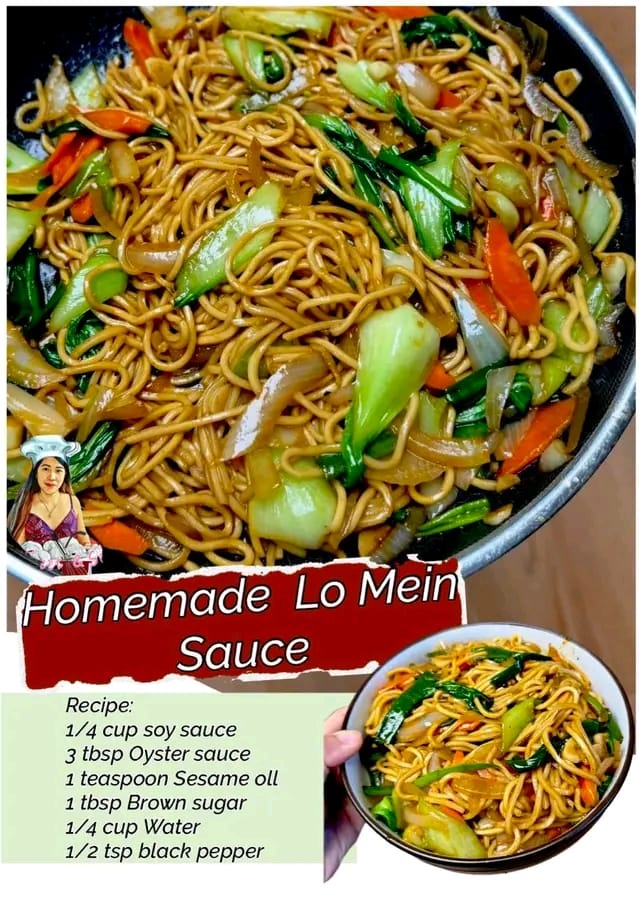
This easy homemade Lo Mein Sauce is savory, slightly sweet, rich, and perfectly balanced. It comes together in minutes and can be tossed with noodles, vegetables, chicken, shrimp, beef, or tofu for a delicious restaurant-style meal at home.
Ingredients
- ¼ cup low-sodium soy sauce
- 2 tablespoons oyster sauce
- 1 tablespoon hoisin sauce
- 1 tablespoon toasted sesame oil
- 1 tablespoon rice vinegar
- 1 tablespoon brown sugar or honey
- 1 teaspoon fresh grated ginger
- 2 cloves garlic, finely minced
- ½ teaspoon white pepper
- ¼ teaspoon red pepper flakes, optional
- 1 tablespoon water
- 1 teaspoon cornstarch, optional, for a thicker sauce
Why You’ll Love This Sauce
The secret to great lo mein is a flavorful sauce that coats every strand of noodle without making the dish overly salty or heavy. This recipe combines salty soy sauce with oyster sauce and hoisin sauce for deep umami flavor. Sesame oil adds a nutty aroma, while rice vinegar provides a little acidity to keep everything balanced.
Brown sugar or honey contributes a subtle sweetness that makes the sauce taste similar to the sauce served at many Chinese-American restaurants. Fresh garlic and ginger add brightness and warmth.
You can also adjust the ingredients depending on your taste. Add more chili flakes for heat, extra honey for sweetness, or a splash of water if you prefer a lighter sauce.
How to Make Lo Mein Sauce
Step 1: Prepare the Garlic and Ginger
Start by finely mincing two cloves of garlic. Grate the fresh ginger using a fine grater until you have about one teaspoon.
Fresh ginger and garlic provide much more flavor than dried versions, so they are worth using whenever possible.
Step 2: Combine the Sauces
In a medium bowl, whisk together the soy sauce, oyster sauce, hoisin sauce, sesame oil, and rice vinegar.
Make sure the ingredients are thoroughly combined. The mixture should have a smooth, dark brown appearance with a rich aroma.
Step 3: Add Sweetness and Seasonings
Add the brown sugar or honey, grated ginger, minced garlic, white pepper, and red pepper flakes if you’re using them.
Whisk again until the sugar begins to dissolve. If using honey, it will blend into the sauce especially quickly.
Step 4: Adjust the Consistency
For a thinner lo mein sauce, simply add one tablespoon of water.
If you want a thicker sauce that clings tightly to noodles and vegetables, mix one teaspoon of cornstarch with the tablespoon of water before adding it to the sauce.
Remember that cornstarch thickens when heated, so the uncooked sauce will still look relatively thin.
How to Use Lo Mein Sauce
Cook your favorite lo mein noodles according to the package directions. Drain them thoroughly and set them aside.
Heat a large wok or skillet over medium-high heat. Add a small amount of neutral cooking oil, then cook your choice of protein and vegetables.
Excellent choices include:
- Chicken
- Shrimp
- Thinly sliced beef
- Pork
- Tofu
- Mushrooms
- Carrots
- Bell peppers
- Broccoli
- Cabbage
- Snow peas
- Bok choy
- Green onions
Once the protein and vegetables are cooked, add the noodles to the pan. Pour the prepared lo mein sauce over everything and toss continuously for several minutes.
The heat will allow the sauce to coat the noodles while the garlic and ginger become fragrant. If the noodles seem dry, add another tablespoon or two of water and continue tossing.
Tips for the Best Lo Mein Sauce
Use low-sodium soy sauce. Oyster sauce and hoisin sauce already contain salt, so low-sodium soy sauce gives you more control over the final flavor.
Don’t skip sesame oil. Toasted sesame oil provides the characteristic nutty flavor associated with many Asian-inspired noodle dishes. A little goes a long way.
Taste before adding more salt. The sauce is intentionally concentrated because it will be mixed with noodles, vegetables, and protein.
Add sauce gradually. You may not need every drop, especially if you’re preparing a smaller portion of noodles.
Use high heat when finishing the dish. Once everything is combined, tossing the noodles over medium-high heat helps the sauce cling to the noodles and creates better flavor.
Variations
Spicy Lo Mein Sauce
For a spicy version, add 1–2 teaspoons of chili garlic sauce, sriracha, or additional red pepper flakes. You can also add a small amount of chili oil for extra heat and richness.
Sweet Lo Mein Sauce
If you prefer a sweeter restaurant-style sauce, increase the brown sugar or honey to 1½ tablespoons. Taste and adjust before adding the sauce to your noodles.
Vegetarian Lo Mein Sauce
Use vegetarian mushroom oyster sauce instead of traditional oyster sauce. Combine it with tofu and plenty of vegetables for a satisfying meat-free meal.
Garlic Lo Mein Sauce
For garlic lovers, add an additional clove or two of minced garlic. You can briefly sauté the garlic before adding the sauce to the noodles for an even deeper flavor.
Storage
Store leftover lo mein sauce in a clean airtight container or glass jar in the refrigerator. It is best used within about 5–7 days.
The ingredients may separate slightly during storage, which is completely normal. Simply shake or whisk the sauce well before using it.
If the sauce becomes very thick after refrigeration, allow it to sit at room temperature for several minutes and stir thoroughly.
Serving Ideas
This sauce works with much more than traditional lo mein noodles. Try tossing it with spaghetti, ramen noodles, rice noodles, udon, or even cooked rice.
For a quick weeknight meal, sauté shredded cabbage, carrots, bell peppers, mushrooms, and green onions. Add cooked noodles and this sauce, then toss everything together.
For a protein-packed dinner, add grilled chicken or shrimp. Thinly sliced beef also works wonderfully because the savory sauce complements its rich flavor.